


The Department of Home Affairs (DHA) has urged couples in unregistered customary marriages to regularise their unions before the looming 31 August 2026 deadline.
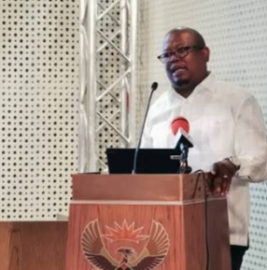
Speaking to Newzroom Afrika on Thursday, Deputy Director-General of Operations at the DHA, Thulani Mavuso, said the department was concerned about the legal difficulties that arise when customary marriages remain unregistered.
The registration allows couples to comply with the Recognition of Customary Marriages Act of 1998, and provides legal proof of their union. The Act came into effect on 15 November 2000 and recognises customary marriages concluded before its commencement. It also requires marriages concluded afterwards to be registered within three months.
However, Mavuso said many couples had failed to register marriages concluded both before and after the law took effect.
“The bigger problem then comes in when one of the spouses dies. We then find ourselves having to conclude a marriage posthumously. In most instances, those are contested by families, which creates problems for matrimonial property and also the conclusion of the estate,” he told the news platform.
Home Affairs Minister Leon Schrieber gazetted the deadline in September 2024, using a provision in the Act that permits the Minister to prescribe a registration period longer than the standard three months.
The extended window covers older marriages that were never registered, as well as later unions whose statutory three-month registration period has elapsed.
Failure to register, Mavuso said, can leave surviving spouses struggling to prove that a marriage existed and expose them to disputes over assets.
“In most instances, women suffer if those marriages are not registered, and all the assets that belong to them in the marriage end up in the hands of the wrong people, be it the family of the husband or vice versa,” Mavuso said.
He cited a recent case in which a husband sought to register his marriage after his wife died, but her family disputed that the union was still valid because the couple had been living separately.
Mavuso said registration could also help establish the legal relationship between parents when official consent is needed for matters involving their minor children, including passport applications.
Couples seeking registration must provide evidence showing that customary negotiations or practices took place. This may include proof of lobola negotiations or a marriage ceremony. They must also bring witnesses who can confirm the union.
“It is actually a simple process because, if people leave these things longer, they create problems downstream,” he said.
Delayed registration could force the DHA to adjudicate conflicting claims between families and decide whether a marriage may be registered posthumously.
“It is a very difficult process that also subjects the department to litigation together with the applicant. We then have to go to court to defend a decision that would not have arisen had people taken into consideration that they are in these customary marriages and that they have to register them,” he said.
Marriage officers at the DHA offices can advise couples according to their circumstances.
Mavuso stressed that the 31 August deadline was intended to encourage people with longstanding unregistered marriages to come forward. However, the cut-off date does not mean Home Affairs will refuse every application submitted afterwards.
“We will not prevent them from registering that particular marriage, even after that particular period. But we do encourage people that this is a legally protected way of ensuring that your marriage is recognised in law,” he emphasised. -SAnews.gov.za


