


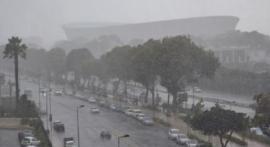
Cold, wet and windy conditions are expected to continue across large parts of South Africa, with the Western and Northern Cape provinces likely to experience the most severe weather.
Weather forecasters Lehlohonolo Thobela and Tokelo Chiloane said the adverse conditions are expected to continue affecting much of the country through Monday, 20 April 2026.
The forecasters attributed the change in weather to the passage of two consecutive cold fronts making landfall over the western parts of South Africa.
“Initially, these systems are expected to impact the Western Cape and Northern Cape, before spreading eastwards across the central and eastern interior over the weekend,” the forecasters said in a statement.
The weather service predicted that by Sunday, 19 April 2026, cold, wet and windy conditions will have spread to the eastern and southern parts of the country, including the southern and eastern coastline of South Africa.
“Moreover, marine conditions are expected to markedly deteriorate, with wave heights along the coastline forecast to reach between 4 and 5 metres from Sunday into Monday, potentially impacting coastal and beach activities.”
Furthermore, daytime maximum temperatures are expected to drop significantly, with some high lying areas in the western interior and adjacent regions possibly experiencing daytime temperatures between 10°C and 12°C.
“These conditions, combined with strong winds, will result in a pronounced wind chill effect. By contrast, the northern extremities of the country are expected to remain relatively warm during this period,” the forecasters said.
Cold, wet and windy conditions may result in a significant wind chill factor, making temperatures feel colder than measured; localised flooding of low-lying areas and poor drainage systems may occur in region experiencing persistent rainfall; disruptions to outdoor and beachfront activities are possible due to strong winds and rough seas and reduced visibility and slippery roads may impact travel conditions.
The weather service has advised the public to take the following precautionary measures, including:
• Dress warmly and ensure adequate heating in homes.
• Use heating devices safely to avoid fire hazards.
• Exercise caution when travelling on wet and slippery roads.
• Avoid unnecessary travel during periods of heavy rainfall.
• Secure loose outdoor objects that may be affected by strong winds.
• Stay away from the coastline during rough sea conditions.
• Continuously monitor official weather updates and warnings issued by SAWS.
Members of the public and stakeholders are strongly urged to continuously monitor official SAWS forecasts and warnings. These warnings will be updated regularly as the likelihood and severity of impacts become clearer.
Members of the public are also advised to treat unauthorised or unverified information sources with caution and to refrain from distributing such information further. – SAnews.gov.za


