


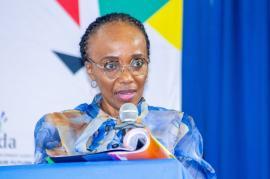
The Minister in the Presidency responsible for Women, Youth and Persons with Disabilities, Sindisiwe Chikunga, has warned young people against substance abuse, cautioning that it threatens their health, safety, education and long-term contribution to South Africa’s socio-economic development.
Chikunga said substance abuse remains one of the most serious challenges confronting South Africa’s youth, contributing to school dropouts, unemployment, crime, mental health challenges, and gender-based violence and femicide (GBVF).
She emphasised that young people are among the most vulnerable groups, as they are increasingly susceptible to dependence on alcohol and drugs, particularly in communities affected by poverty, unemployment, inequality, and limited access to recreational and economic opportunities.
“This often results in a range of problems, including academic difficulties, health-related problems such as mental health illnesses, poor peer relationships, conflict with the law, and a high rate of accidents. These problems also harm family members, communities, and the entire society.
“Substance abuse robs young people of their potential and undermines the future of our country. It fuels violence, weakens families, destroys communities, and places enormous pressure on social services,” the Minister said.
As part of government’s response, the Department of Women, Youth and Persons with Disabilities will continue working with the Central Drug Authority, Department of Social Development, Department of Health, law enforcement agencies, and civil society organisations to strengthen prevention programmes, awareness campaigns, and psychosocial support services.
“We cannot speak about youth development without addressing the devastating role that drugs and alcohol play in perpetuating abuse, crime, and hopelessness. Prevention must start early, and it must involve individual youth, their families, schools, faith-based organisations and communities,” the Minister said.
She called on young people to make informed and responsible choices; seek help when facing substance-dependency challenges, and participate actively in positive initiatives that reduce risky behaviour and promote healthy living.
“Our youth must understand that saying no to drugs is saying yes to life, dignity, and opportunity. We urge young people to become champions of change and to protect themselves and their peers by resisting the temptations of abusing dependency creating substances,” Chikunga said.
The department reaffirmed its commitment to advancing youth empowerment, social cohesion and community safety in line with the National Development Plan, the National Youth Policy and the National Drug Master Plan. – SAnews.gov.za


