


The Border Management Authority (BMA) has announced the successful bidders appointed to lead the redevelopment of six of South Africa’s busiest land ports of entry, marking a major step towards modernising the country’s border infrastructure and strengthening economic growth.
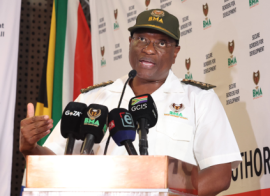
Speaking at a media briefing on Tuesday in Pretoria, BMA Commissioner, Dr Michael Masiapato, said the project represents a turning point in how South Africa manages its borders.
The redevelopment, to be implemented through public-private partnerships (PPPs), forms part of government’s broader efforts to enhance border security, improve the movement of goods and people, and support regional economic integration.
The process to appoint the bidders followed a rigorous and transparent procurement process.
“Following the publication and the subsequent closure of the Request for Proposals in search of public-private partners for these projects in 2024, a fair, transparent and competitive Supply Chain Management processes ensued during the course of 2025,” he said.
In addition, a multidisciplinary team of financial, legal and technical experts was assembled to ensure compliance with governance standards and ensuring value for money.
The successful bidders, made up of concessionaires and consortia combining multiple companies, will oversee the redevelopment of the six ports:
• Beitbridge Port of Entry ( Limpopo) – Baobab Concession.
This concessionaire is expected to conduct the construction work in a phased approach for an approximated period of about three years. The Baobab Concession is made up of Yakani Group, Wendra Infraco, Matla Integration, Tau Capital, Navigator Holding & Baobab Community Trust.
• Lebombo Port of Entry (in Mpumalanga) – Raulux Consortium.
This consortium is expected to do the construction work in a phased approach for an approximated period of about three years. The Raulux Consortium is made up of Luxus Developments, Raubex, Exhantini Investments, Vulindlela Concessions, and Harith General Partners.
• Oshoek Port of Entry (Mpumalanga) – Baobab Concession.
This concessionaire is expected to do the construction work in a phased approach for an approximated period of about two years. The Baobab Concession is made up of Yakani Group, Wendra Infraco, Matla Integration, Tau Capital, Navigator Holding & Baobab Community Trust.
• Maseru Bridge Port of Entry (Free State) – Kgorong Consortium.
This consortium is expected to do the construction work in a phased approach for an approximated period of about two years. The Kgorong Consortium is made up of Motseng Concessions, IDEAS Infrastructure, Crowie Concessions & Thebe SPV.
• Kopfontein Port of Entry (North West) – Kopfontein Consortium.
This consortium is expected to do the construction work in a phased approach for an approximated period of about two years. The Kopfontein Consortium is made up of Talis Property Fund, Unik Civil & Construction Engineers, and SSG Facilities.
• Ficksburg Bridge Port of Entry (Free State) – Imbani Consortium.
This consortium is expected to do the construction work in a phased approach for an approximated period of about two years. The Imbani Consortium is made up of Imbani Projects, Reaga Infra Border Holdings, M&M Capital and Russet Trading & Investments.
Phased approach
Masipato explained that construction is expected to be rolled out in phases over two to three years depending on the site.
“Based on the current projections, we anticipate that construction will begin later this year or early next year for some ports with a phased rollout of the construction work for about a two-to-three-year period,” Masiapato said.
He said the BMA is confident the appointed bidders have the capacity to deliver on the projects.
“As the Border Management Authority, we have full confidence in them that they will deliver on these key national infrastructure projects within our border environment,” he said.
The redevelopment will also involve extensive stakeholder engagement, including communities, municipalities, business chambers and cross-border traders.
“Although engagements have started over time, we just want to confirm that within the next few weeks, we will be amplifying our conversations with all critical stakeholders around the affected ports and that includes engagements with communities, municipal leadership, traditional leaders, Business Chambers, freight associations, and cross-border traders to appreciate their pressure points before construction starts,” the Commissioner said.
Improving efficiency and tackling vulnerabilities
Masiapato said the upgrades will pave the way for the implementation of the One-Stop Border Post model and smart border systems aimed at improving efficiency and coordination with neighbouring countries.
“All these infrastructure upgrades would allow us to implement the One-Stop Border Post (OSBP)… including the activation of smart borders with nonstop model for the movement of freight,” he said.
He emphasised that the PPP model would also help address vulnerabilities in procurement systems.
“In fact, given the complexities and the vulnerabilities of the Supply Chain Management process, this public-private partnership model is seen as a critical strategy to close the vulnerabilities and shun any opportunities for any corrupt tendencies,” the Commissioner said. – SAnews.gov.za


