


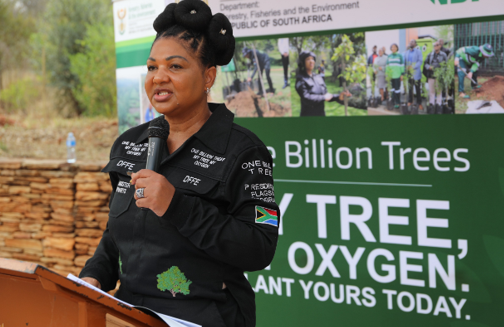
By Bernice Swarts
The protection of the ozone layer remains one of the world's most important environmental success stories, and South Africa remains committed to protecting the ozone layer and advancing climate-friendly cooling.
Through international cooperation, scientific research and commitment to protecting the environment, South Africa continues to make significant progress in reducing substances that damage the ozone layer. This was the key message I delivered on behalf of the South African delegation at the 38th Meeting of the Parties to the Montreal Protocol, held in Kigali, Rwanda, from 2 to 6 November 2026.
South Africa remains committed to this global effort and continues to support the Montreal Protocol, one of the most successful international environmental agreements. The Protocol demonstrates what the global community, and indeed African countries, can achieve when they work together towards a common environmental goal. This commitment was reaffirmed at the 38th Meeting of the Parties to the Montreal Protocol, held in Kigali. It was particularly important that the meeting took place in Kigali, the birthplace of the historic Kigali Amendment, which seeks to reduce the use of hydrofluorocarbons (HFCs), powerful greenhouse gases commonly used in refrigeration and air-conditioning systems.
South Africa ratified the Kigali Amendment in 2019 and has since taken important steps towards meeting its commitments. These include introducing a licensing and quota system for HFCs, strengthening regulations and enforcement, and working with industry and other stakeholders to promote environmentally friendly alternatives.
South Africa has also achieved an important milestone by phasing down 97.5% of hydrochlorofluorocarbons (HCFCs), putting the country well ahead of its international commitments. This achievement reflects the importance of cooperation between government, industry, technical institutions and international partners.
As part of our efforts to promote climate-friendly cooling technologies, South Africa has implemented four demonstration projects in key economic sectors, including grocery retail, dairy processing, manufacturing and public healthcare facilities. These projects demonstrate that environmentally friendly and energy-efficient cooling technologies are practical and can deliver both environmental and economic benefits.
The transition to sustainable cooling is not only about protecting the ozone layer. It also provides an opportunity to address climate change, improve energy efficiency, create jobs and develop new skills.
However, more work remains to be done. South Africa encouraged countries that have not yet ratified the Kigali Amendment to do so. Universal participation is important if we are to achieve the full environmental and climate benefits of this global agreement.
Supporting developing countries
The successful implementation of the Montreal Protocol depends on adequate financial and technical support, particularly for developing countries. South Africa therefore supported a strong and adequately funded replenishment of the Multilateral Fund, which will assist developing countries in meeting their obligations under the Protocol.
Many developing countries continue to face challenges relating to access to new technologies, skills development, customs enforcement and the transition to energy-efficient and climate-friendly alternatives. These challenges require sustained international support.
We must recognise that countries cannot be expected to meet ambitious environmental commitments without the necessary financial resources, technical assistance and capacity-building support.
Investing in skills development and empowering women
South Africa believes that the transition to environmentally friendly technologies must also create opportunities for ordinary people, particularly women, young people, people with disabilities and communities that have historically been excluded from economic opportunities.
To date, our country has trained 1,002 informal refrigeration and air-conditioning technicians and 35 lecturers in good servicing practices, refrigerant management, energy efficiency and the safe handling of alternative refrigerants.
More than 270 women have benefited from targeted skills development programmes, while 50 women technicians have received specialised technical training to strengthen their participation in the industry.
These programmes are intended to improve access to employment, entrepreneurship and self-employment opportunities, particularly for women from rural and previously disadvantaged communities.
As part of our continued commitment to skills development, our department is planning to train an additional 800 informal refrigeration and air-conditioning technicians, with a particular focus on increasing the participation of women. The programme aims to include 400 women technicians.
The training will focus on the safe installation, servicing and maintenance of cooling equipment that uses natural refrigerants, while promoting energy efficiency, safety standards and responsible refrigerant management.
Protecting the strengths of the Montreal Protocol
As we look towards the future, we must also protect the institutional arrangements and governance structures that have made the Montreal Protocol successful for nearly four decades. The Protocol has delivered measurable environmental results through effective cooperation, clear responsibilities and established implementation mechanisms.
South Africa believes that any proposals to change these arrangements must be carefully considered and supported by a clear need. Rather than introducing unnecessary institutional changes, our priority should be to strengthen the systems that have already delivered positive results.
We also recognise the important role played by the Ozone Secretariat in supporting negotiations, assisting countries with implementation and promoting compliance with the Montreal Protocol. Adequate funding for the Secretariat is therefore essential to ensure that it continues to fulfil its mandate effectively.
In conclusion, South Africa believes that greater attention must be given to improving energy efficiency in the refrigeration and air-conditioning sector, strengthening customs enforcement to combat the illegal trade in controlled substances and equipment, and expanding technical skills development.
The Kigali Amendment provides an opportunity to achieve several benefits at the same time. These include protecting the ozone layer, reducing greenhouse gas emissions, improving energy security, creating employment and promoting inclusive economic growth.
I must also emphasise that South Africa believes protecting the ozone layer is a shared responsibility. We therefore remain committed to working with other countries, international organisations, industry and development partners to advance the objectives of the Montreal Protocol and its Kigali Amendment. By strengthening our partnerships, investing in people and supporting the transition to sustainable technologies, we can protect the environment while building a more inclusive and prosperous green economy for future generations.
Swarts is the Deputy Minister of Forestry, Fisheries and the Environment


