


The South African Reserve Bank Monetary Policy Committee (MPC) has decided to keep the interest rate unchanged at 7.25
The prime lending rate will also stay steady at 10.75%.
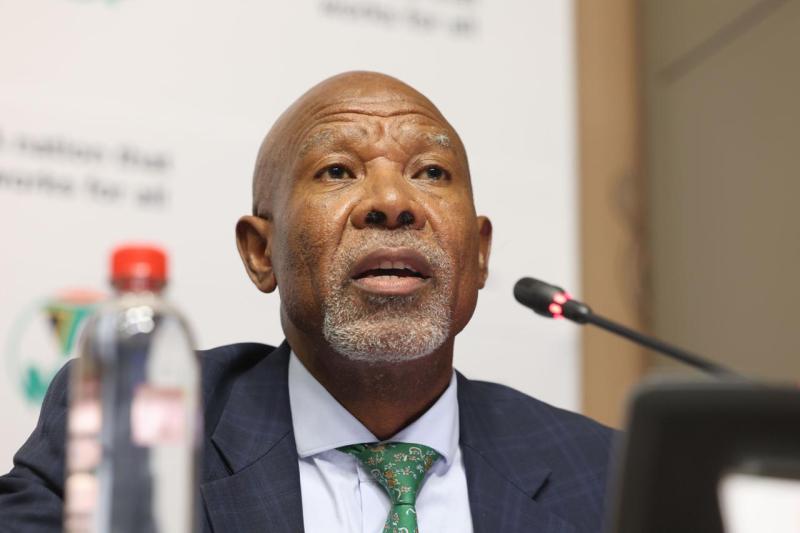
Reserve Bank Governor, Lesetja Kganyago, announced the MPC’s statement on Thursday afternoon.
“Four members preferred no change, while three favoured an increase of 25 basis points.
“After two policy adjustments this year, and with a moderately restrictive policy stance, we decided to pause for now. We are mindful of risks, and will not hesitate to raise rates if needed, to return inflation to target over the policy horizon,” Kganyago stated.
The announcement comes on the back Statistics South Africa’s Consumer Price Index announcement indicating a rise in inflation to 5.2% in October.
Kganyago noted that heightened inflation was underscored “mainly because of fuel costs”.
“High inflation prints, over 5%, are expected to persist into early next year. After that, the forecast starts showing somewhat lower inflation. The main reason for this is that we will no longer be comparing to pre-war fuel prices.
“Aside from fuel, we have been benefitting from unusually subdued inflation for both food and other goods. We expect more pressure in these categories next year. Food inflation is bottoming out from current lows. The Rand is also less appreciated, which affects import prices,” he said.
The governor indicated that the MPC is also concerned about the effects of the El Niño weather pattern on inflation and food prices.
“Water restrictions have already been announced for the Western Cape, due to lower dam levels. Elsewhere in the country, rainfall has been generally better, but dry conditions early next year could damage harvests, driving up food prices.
“Finally, we are concerned about an upward trend in core inflation. We need to see that reverse, to show that price setters are aligning with our 3% target.
“We assess inflation risks to the upside,” Kganyago said.
The economy
The governor noted that the global economy is “still in a difficult position” with elevated oil prices, pressure on fuel costs from refinery margins and shipping rates as well as the acceleration of food inflation.
“Major central banks continue to operate with a tightening bias, with the Bank of England hiking rates recently for the first time since 2023. In the coming months, markets anticipate further increases across major economies, to deal with stubbornly high inflation.
“Global growth and trade has been resilient this year, with some countries benefitting from the Artificial Intelligence boom. However, the valuations of major technology companies have dropped recently. Global fiscal positions are also stretched, with unsustainable debt dynamics in several major economies and pressure on borrowing costs,” he said.
In the South African context, growth outlook is “broadly unchanged”.
“We still had a contraction in the second quarter of this year, with the onset of the war. There now appears to be a gradual recovery under way. We envision growth picking up to about 2% annually, over the forecast period, from just over 1% now.
“In the short term, this recovery is mainly coming from domestic trade, with wholesale and retail sales both looking stronger. This points to some resilience in household demand.
“That said, longer-term growth will have to come from rising investment, and not just more consumption. As it stands, fixed investment in South Africa is much too low, at about 13% of output. This is well below historical peaks, and also one of the lowest rates in the world,” he said. – SAnews.gov.za


