


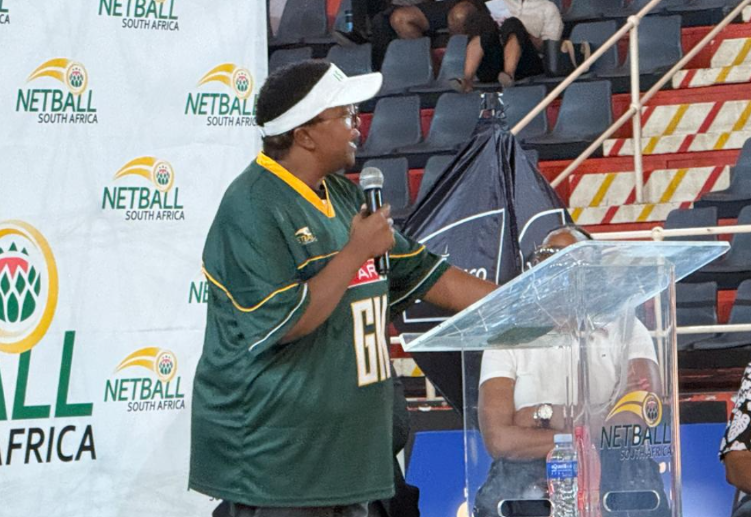
Deputy Minister in the Presidency for Women, Youth and Persons with Disabilities Mmapaseka Letsike has called for greater inclusion in sport, saying children should be free to pursue the games they love without being made to feel they do not belong.
Addressing a men’s netball tournament on Thursday, Letsike reflected on her own experience as a football-loving girl, who helped establish the first girls’ football team at her high school. She said the name "Steve" had stayed with her since those days on the football field.
“So here I am, a woman called Steve because she played football, addressing men who play netball. The irony is delightful. But beneath it lies a question that matters deeply to me: how many gifted children are made to feel that the game they love was not meant for them?”
Letsike said exclusion can begin through everyday attitudes, including jokes and dismissive comments that discourage children from taking part.
“That kind of exclusion rarely begins with a written rule. It begins with a joke, a dismissive look, an adult who tells a child to choose a different game. We may call it harmless teasing, but a child can carry those words for years. The cost is not only wounded confidence; it is talent our country never gets to discover,” Letsike said.
Letsike said the tournament represents more than competition, as the athletes’ participation could help widen opportunities for others.
“Yet by taking your place on this court, you also widen the horizon for the boy who loves netball, just as generations of women widened it for girls who love football,” she said.
Letsike said government has a responsibility to turn the constitutional promises of dignity, freedom and substantive equality into everyday opportunities.
She added that inclusion requires accessible facilities, community-based opportunities and public institutions that consider who might still be excluded.
“This means asking difficult questions. Can a child in a township find a safe court and a coach? Can a young person in a rural community afford to travel to a tournament? Can an athlete with a disability participate on equal terms? During Disability Rights Awareness Month, we must recognise that inclusion is not a favour; it is a public responsibility,” Letsike said.
She stressed that the growth of men’s netball should be matched by greater investment in women’s sport.
“The growth of men’s netball must go hand in hand with greater investment in women’s sport. Equality is not achieved by moving exclusion from one group to another; it is achieved when the doors are opened wider for everyone,” she said.
With International Men’s Day approaching and the 16 Days of Activism against Gender-Based Violence and Femicide ahead, Letsike urged men to carry the values of sport into their communities.
“Real strength is not control over another person. It is the confidence to respect difference, the discipline to reject violence, and the courage to stand against prejudice, including the growing anti-gender backlash,” she said.
Letsike called on Netball South Africa, municipalities, schools, sporting bodies and sponsors to support accessible facilities, community leagues, trained coaches and development pathways.
“Let us measure success not only in trophies, but in the young people who are able to enter the game because we acted together,” she said.
Welcoming participants from across Southern Africa, Letsike said sport could strengthen friendship and solidarity across borders. She encouraged athletes to compete passionately and honour their opponents.
“Football gave me the name Steve. What I hope we give the next generation is something more enduring: the freedom to pursue their gifts without first having to prove that they belong,” Letsike said. – SAnews.gov.za


