


The waste sector must no longer be viewed merely as a problem for government to manage but as a vital contributor to economic growth, enterprise creation and environmental sustainability.
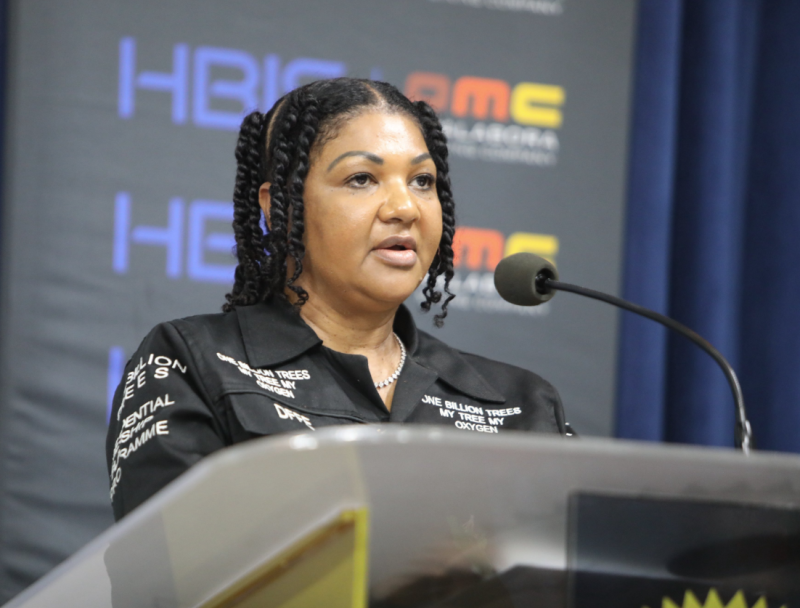
That is according to Deputy Minister of Forestry, Fisheries and the Environment Bernice Swarts, who delivered an address at the Circular Economy Summit held at the University of Limpopo Thursday.
Swarts announced that the department is reviewing the Extended Producer Responsibility (EPR) Regulations to strengthen governance and accountability, including a proposed requirement for Producer Responsibility Organisations (PROs) to invest 40% of fees collected into waste infrastructure.
She said the transition to a circular economy requires a fundamental shift in how products are designed, manufactured, consumed and managed at the end of their useful lives.
“The waste sector must no longer be viewed merely as a problem that government and municipalities must manage. It must increasingly be recognised as an important contributor to economic development, enterprise creation and environmental sustainability.
“Landfilling should be the last resort, not the default option. Every material that can be recovered, reused, recycled or beneficiated represents a potential economic opportunity.
“When recyclable materials are sent to landfill, we lose valuable resources that could have supported new businesses, created jobs and supplied raw materials to our industries,” Swarts noted.
The Deputy Minister highlighted that current estimates indicate only approximately 10% of waste is diverted from landfill, while fewer than 20% of landfill sites are compliant.
In this regard, the DFFE is finalising listed activities for waste management to reduce licensing time, with a proposed authorisation turnaround time of 90 days for the beneficial use of waste.
Addressing e-waste
Swarts also used the platform to mark International E-Waste Day, drawing attention to the growing challenge of “Fast Tech”, low-cost electronic products such as earphones, charging cables and mini fans that are often discarded improperly.
“Unlike large household appliances, which consumers are more likely to recognise as electronic waste, small devices are often overlooked.
“A broken pair of earphones may be thrown into a general waste bin. An old charging cable may remain forgotten in a drawer. A small electronic device with a battery may be discarded without anyone considering the materials it contains or the risks associated with its improper disposal.
“Yet these products may contain valuable recoverable materials, while some batteries and components can pose environmental and safety risks when handled or discarded incorrectly,” Swarts said.
She called on consumers to recognise, return and demand compliance regarding small electronic devices.
Innovation and entrepreneurship
Turning to the students in attendance, Swarts emphasised the critical role of universities in driving innovation and entrepreneurship, aligning with the National Development Plan’s vision of universities as drivers of economic growth.
She urged students to see environmental challenges as opportunities.
“To our students, I challenge you to use your education to solve real problems. Let your research respond to the needs of our communities. Let your innovations create opportunities.
“Let your entrepreneurial ideas contribute to economic growth while protecting our environment,” she said.
The Deputy Minister noted that 56 small and medium-sized enterprises have been supported through the department’s Recycling Enterprise Support Programme, with support valued at approximately R200 million.
At least 12 of those are women-owned while in Limpopo, 13 beneficiaries are participating in the programme.
“This demonstrates the importance of targeted interventions to ensure that women participate meaningfully in the green economy and are not left behind as new industries and markets emerge.
“Our objective should not merely be to support businesses to enter the waste sector. We must help them become sustainable, competitive and capable of growing,” Swarts stated
Deputy Minister Swarts called for stronger collaboration between government, industry, municipalities, communities and entrepreneurs, emphasising that no single institution can build a circular economy alone.
“Let us work together to ensure that the solutions developed at institutions such as the University of Limpopo reach the communities that need them most.
“Together, let us turn waste into opportunity, research into innovation, innovation into enterprise, and collaboration into lasting environmental and economic benefits for our people. Let us find solutions for Africa,” she said. – SAnews.gov.za


