


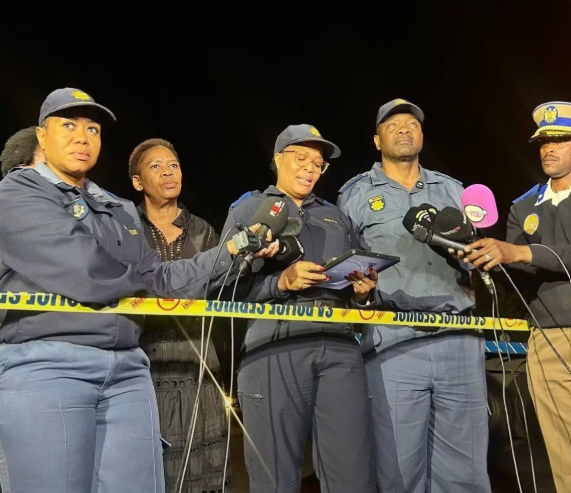
Acting National Police Commissioner Puleng Dimpane has issued a stern warning to those involved in violent protests that led to the torching of cars in Soweto and Durban.
"The South African Police Service [SAPS] will not tolerate lawlessness. We will not allow violence, the torching of vehicles, destruction of property or attacks on people to continue. Anyone who chooses to break the law will be dealt with decisively, without fear or favour,” she said on Thursday.
This follows the torching of 10 cars in Soweto, Gauteng, and 14 in Durban, KwaZulu-Natal during protests outside Home Affairs offices assisting asylum seekers.
The Commissioner said three foreign nationals were arrested, while shops belonging to foreign nationals have also been looted amid the unrest.
The protests are linked to claims that a recent Constitutional Court ruling on asylum applications gives undocumented foreign nationals a blanket amnesty.
“Those behind the torching of vehicles will be pursued. Those responsible for acts of violence and destruction will be identified, investigated and, where sufficient evidence exists, arrested and brought to book. There will be consequences for criminality.
“The right to raise concerns and to protest does not give anyone the right to commit crime. Legitimate grievances must be pursued through lawful and constitutional processes,” said Dimpane.
This comes as th Inter-Ministerial Committee (IMC) on Migration moved to quell widespread confusion and misinformation surrounding the Constitutional Court judgment on asylum applications, stressing that the ruling does not automatically grant refugee status or permanent residence to people entering South Africa.
The clarification follows an urgent IMC meeting on Wednesday night after the implementation of the judgment led to an influx of people seeking access to Refugee Reception Offices, with long queues reported outside Home Affairs facilities.
Addressing a media briefing in Pretoria on Thursday, the IMC said the Constitutional Court judgment, handed down in July in the matter of Scalabrini Centre of Cape Town and Another v Minister of Home Affairs and Others, must not be interpreted as legalising unlawful migration or giving people an automatic right to remain in the country.
The Court declared certain provisions of the Refugees Act unconstitutional because they prevented some people from accessing the asylum system solely on procedural grounds. These included people, who had entered South Africa irregularly, did not possess an asylum transit visa or failed to report to a Refugee Reception Office within the prescribed period.
The Court found that such procedural barriers could result in people being excluded from the asylum process before their claims were properly assessed.
The IMC said the judgment, therefore, restores access to the asylum determination process, rather than automatically conferring refugee status. -SAnews.gov.za


