


South Africa’s high burden of tuberculosis (TB), HIV and cancer is enabling local scientists to develop nuclear medicine techniques that could improve the early detection and treatment of diseases locally and internationally.
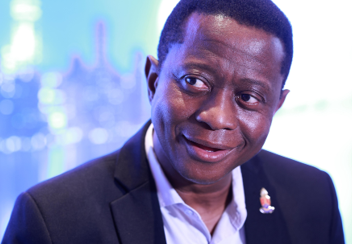
Nuclear Medicine Research Infrastructure (NuMeRI) President and Chief Executive Officer, Professor Mike Sathekge, says South Africa’s experience in tackling diseases prevalent on the continent gives its scientists expertise that can complement research conducted in countries where these illnesses are less common.
Sathekge, who is also Head of Nuclear Medicine at Steve Biko Academic Hospital and the University of Pretoria, made the comments while addressing the media on the sidelines of the High-Level Conference on International Cooperation in Open Science currently underway in Shanghai, China.
The conference is a build-up to the 19th Pujiang Innovation Forum (PIF), where South Africa will participate as Country of Honour.
READ | SA innovation takes centre stage at Chinese Innovation Forum
“This is about showcasing that South Africa can be one of those countries which can collaborate with other global countries in terms of the science that we do in South Africa,” Sathekge said.
South Africa is the first African country to be designated Country of Honour at the forum, which will bring together policymakers, researchers, innovators and industry leaders to discuss emerging technologies and deepen international scientific cooperation.
The South African delegation to the forum is led by Science, Technology and Innovation Minister, Professor Blade Nzimande.
Sathekge said international scientific cooperation should extend beyond comparing countries’ capabilities and place greater emphasis on connecting researchers who possess complementary knowledge.
“Instead of comparing, we must connect with the other countries. That is critical if we are to benchmark while we are looking at the problems and the burden of disease in our country.
“How do we use that expertise to also inform the region – Africa – but also consider what the other colleagues are doing and take it from there?” he said.
South African contribution
Sathekge said South Africa could contribute important knowledge on TB, HIV and cancer through its work in radiotheranostics and nuclear medicine.
Nuclear medicine uses small amounts of radioactive materials to examine the functioning of organs and tissues, diagnose diseases and deliver targeted treatments.
“In this regard, for example, you would be aware that we have quite a burden of diseases in South Africa. We can show that radiotheranostics and nuclear medicine can be part and parcel of addressing this,” he said.
South African researchers have contributed to evidence showing that the progression of TB is not uniform and that lesions in the same patient may respond differently to treatment.
“We have been key in contributing to show that the pathogenesis of tuberculosis is heterogeneous. How you really treat it might not be as easy as the usual six months. How do we change it? Is treatment going to be prolonged?” Sathekge said.
Understanding these differences could help researchers develop biomarkers that indicate how patients are responding to treatment without relying exclusively on expensive imaging technology.
“Those biomarkers can be validated to detect patients very early. That brings complicated nuclear medicine techniques to actually help derive better on-site techniques that will help our patients.”
Sathekge said nuclear medicine could also be used to assess whether new TB medicines are working inside a patient’s body.
“The lesions are not the same in tuberculosis. You need to be clear that this lesion will respond earlier, and the other one will respond later,” he said.
This information could assist doctors in determining which patients require longer treatment or a combination of medical treatment and surgery. It could also help prevent the disease from recurring.
Sathekge said similar technologies could help address cancer, particularly because many South African patients are diagnosed only after the disease has reached an advanced stage.
He said medical imaging should consequently be regarded as an essential component of healthcare and not an unaffordable luxury.
“Imaging should not be a luxury. It is part and parcel of what we need. It helps with therapies but also makes sure that we can have precision medicine here and not just theoretically,” Sathekge said.
South Africa’s nuclear medicine research forms part of the country’s health innovation capabilities being showcased in China.
The PIF is expected to provide South Africa with an opportunity to promote research partnerships, knowledge exchange, technology transfer and investment while positioning the country as a gateway to Africa’s innovation ecosystem.
The PIF is taking place from 11 - 14 September. –SAnews.gov.za


