


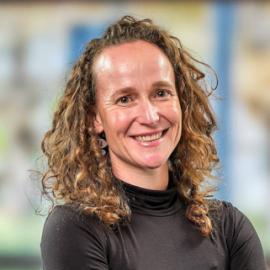
Senior Research Scientist at Sony AI, Dr Wiebke Hutiri, has stressed the need to place women at the centre of science, technology and innovation to ensure that technological advances benefit all South Africans.
Delivering a keynote address at the 23rd edition of the South African Women in Science Awards (SAWiSA) ceremony in Johannesburg on Thursday evening, Hutiri warned that South Africa cannot afford to leave women out of the artificial intelligence (AI) equation.
Hutiri said women must not only be seen as beneficiaries of research and technology but must also play a central role in shaping research questions, designing methodologies, analysing data and making decisions about research priorities and funding.
“To foster science that benefits all South Africans, we need to imagine women as the beneficiaries of research outputs. We need women framing research questions, designing study methodologies that account for female behaviour, and interpreting results that resonate with the experience of females,” Hutiri said.
She said women must also be represented as data subjects and decision-makers in determining research priorities and how resources are allocated.
Dr Hutiri drew attention to research showing that people do not only respond to threats through the traditional “fight or flight” response but can also turn to solidarity and collective action.
She referred to psychologist Shelley Taylor and her team's “tend and befriend” model, as well as the work of Professor Liesel Ebersöhn of the University of Pretoria on resilience and the concept of “flocking”.
Ebersöhn’s research, based on years of fieldwork, found that communities facing similar socio-economic challenges could respond differently, with some demonstrating resilience through cooperation and the mobilisation of collective resources.
“Fight and flight are actually not the only options that people have when they respond to threat. Instead, individuals very often choose solidarity, coming together to leverage resources and counteract ongoing risks,” Hutiri said.
She said this understanding of collective resilience offered important lessons as South Africa navigates the rapid technological changes being driven by AI.
Women needed across the AI value chain
Hutiri, who specialised in AI during her master's studies in computer science at the University of Cape Town, said she had viewed AI as an opportunity to solve practical challenges.
Her interest centred on using AI to better predict household electricity consumption, improve utility infrastructure and service delivery, and support the integration of renewable energy into adaptive energy grids.
However, Hutiri warned that while AI held enormous potential, technological change is not always beneficial to everyone.
“What will it take to promote and enable AI that benefits all South Africans? We need to imagine women as the beneficiaries of AI,” Hutiri said.
She said women must be involved in specifying data requirements and identifying the evaluations that should be conducted.
They should also play a role in designing data collection and evaluation methodologies that take account of female behaviour and AI use, as well as analysing datasets and interpreting results in ways that reflect women's experiences.
Importantly, she said, women should also be able to benefit economically from the growing AI economy.
“We need women making money from AI. In short, we cannot afford to leave women out of the AI equation,” she said.
Hutiri also emphasised that women's participation in science, technology and innovation is not simply a matter of fairness.
“Today, AI is fuelling the next technology revolution. It is now more important than ever that we place women at the centre of science, technology and innovation, not just as a matter of fairness, but an absolute necessity to maintain social cohesion and resilient communities.”
Celebrating women driving science forward
Dr Hutiri also paid tribute to the women being recognised at the event, noting their significant contribution to advancing science and innovation in South Africa.
Collectively, the award recipients have produced 1 742 peer-reviewed papers and 112 book chapters, while currently supervising 139 postgraduate students. They also chair conferences, edit academic journals, represent South Africa in international forums and serve on disciplinary and societal boards.
However, Hutiri said these achievements did not capture the full extent of the work undertaken by women in science. She noted the often-unseen labour of teaching, volunteering on committees, supporting students during difficult moments and caring for children and family members.
She also commended the women for their tireless work in advancing science, technology and innovation, and called for continued solidarity in driving progress.
SAWiSA is the Department of Science, Technology, and Innovation’s flagship Women’s Month event. It recognises and rewards the excellence of South African women in science, technology, and innovation (ST&I), while honouring researchers and scientists whose achievements advance knowledge, drive innovation, and inspire the next generation of women and girls to pursue careers in ST&I.
This year’s theme: “Placing Women at the Centre of Science, Technology and Innovation,” aligns with the department’s broader mantra of “Placing Science, Technology and Innovation at the Centre of Government, Education, Industry and Society.”
The theme highlights the critical role women play in advancing scientific excellence, driving innovation, and contributing to South Africa’s socio-economic development. – SAnews.gov.za


