


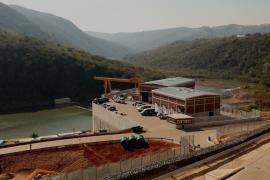
The eThekwini Metropolitan Municipality is pressing ahead with multi-billion-rand water infrastructure projects aimed at strengthening water security, stabilising supply and improving service delivery across the city.
The Lower uMkhomazi Bulk Water Supply Scheme, which includes a storage dam, a water abstraction point and a water treatment plant, has entered Phase 2 at a price tag of R11 billion.
“Upon completion, the project will produce 100 megalitres of water per day. Of this amount, 75 megalitres will be supplied to eThekwini Municipality. This volume will be sufficient to supply all areas in the south, from Isipingo to uMkhomazi.
“The water currently being supplied to these areas will then be redirected to the central, northern and outer western regions to further stabilise supply,” eThekwini Municipality Mayor Cyril Xaba said on Thursday during a media roundtable outlining the progress of the Presidential eThekwini Working Group.
Phase 1 focused on raw water components, including the Ngwadini and Goodenough systems, while Phase 2 will deliver potable water infrastructure.
This infrastructure features a 100 ML/day water treatment facility, gravity pipelines and expanded reservoir capacity.
The Mayor said significant strides have been made with the Lower uMkhomazi Bulk Water Supply Scheme.
“Last week, we introduced the contractor who will commence with the second phase of the Water Treatment Works. Although the project was delayed by legal processes, Umgeni-uThukela Water has committed to ensuring that, by the end of next year, we will begin receiving water from this scheme,” he said.
The Presidential eThekwini Working Group is driving infrastructure projects, demonstrating the effectiveness of its work in coordinating and accelerating interventions to address key developmental, infrastructure, economic, and service delivery challenges within the eThekwini Metropolitan Municipality.
The Working Group also seeks to strengthen collaboration between national, provincial and local government, while ensuring improved communication and stakeholder engagement on progress made.
“For the first time in five years, all our bulk water reservoirs remained stable throughout the festive season, with the Durban Heights, Wiggins and Midmar Treatment Works operating at full capacity.
“This resulted in communities in the north, south and central regions enjoying an uninterrupted water supply, and I am pleased that this trend has continued beyond the festive season,” Xaba said.
This is due to investment in the Northern Aqueduct, as well as the refurbishment and upgrade of the Ntuzuma Pump Station, both of which have significantly stabilised water supply in northern areas.
The R1.2 billion, 24 km bulk pipeline of the Southern Aqueduct Project involves replacing a 70-year-old, 900 mm diameter concrete pipe with a 1 200 mm diameter steel pipe and is expected to stabilise water supply from Durban Central to southern areas.
The system supplies water to approximately 1.2 million people via 33 reservoirs and is one of the city’s most critical bulk water infrastructure projects, aimed at improving the bulk water network, reducing water loss and enhancing water service delivery.
“We are also making excellent progress with the Southern Aqueduct upgrade, with several work packages already completed. We are confident that this R1.2 billion project will be completed by December this year, bringing much-needed relief to the 1.2 million residents living in the south of Durban,” the Mayor said.
Work Package One has been successfully commissioned. This newly commissioned section consists of approximately four kilometres of new steel pipeline, connecting the Westcliff Reservoir, Chatsworth Reservoir 1 and downstream reservoirs in Umlazi.
Work Package Three remains on track for commissioning at the end of May.
Work is progressing on the concrete pipeline on Northbourne Road in Westville. Pipe installation was scheduled to start on 27 May 2026.
Due to the system’s inability to operate at full capacity, after a scheduled shutdown and tie-in works, emergency water rationing was implemented until 27 May 2026.
Delays were experienced in the preparatory phase due to fibre and electrical cables within the construction area. -SAnews.gov.za


