


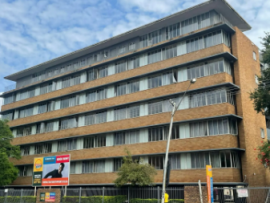
The Department of Human Settlements and the National Student Financial Aid Scheme (NSFAS) are set to sign a Memorandum of Understanding (MOU) aimed at addressing growing disputes between student tenants and landlords in the rental housing sector.
Human Settlements Minister Thembi Simelane announced the planned agreement when she was delivering the department’s 2026 Budget Vote in Parliament on Tuesday.
The agreement seeks to formalise a collaborative partnership between the National Department of Human Settlements, NSFAS and Rental Housing Tribunals across the country.
According to Simelane, the partnership will focus on educating student tenants and landlords about their respective rights and responsibilities amid growing concerns over exploitation and contractual disputes in student accommodation.
“We are concerned about reports of student tenants being exploited by landlords, as well as instances where some students fail to honour their contractual obligations with landlords, despite receiving NSFAS funding,” Simelane said.
The Minister said the department has already engaged student formations and other stakeholders, and awareness programmes will soon be rolled out across all provinces.
Addressing growing unlawful occupation of land and buildings
The Minister noted that Rental Housing Tribunals are now operational in all nine provinces and provide free dispute resolution services to both tenants and landlords in the public and private rental markets.
This comes as government intensifies efforts to address the increasing unlawful occupation of land and buildings across the country.
Simelane said illegal occupation continues to place severe pressure on municipalities and property owners, while also creating dangerous living conditions.
“We all witnessed the tragic consequences of illegally occupied buildings in the City of Johannesburg, where lives were lost,” she said.
In response, government has drafted and published the Prevention of Illegal Eviction (PIE) Amendment Bill for public comment.
The proposed legislation aims to strengthen the management of unlawful occupation while balancing the rights of vulnerable groups, including women-headed households, children, older persons and people with disabilities, alongside the rights of property owners and municipalities.
“Parallel to this, we are also conducting nationwide public information sessions to solicit inputs from various stakeholders. To date, we have covered KwaZulu-Natal, Limpopo, Mpumalanga and Western Cape. By the closing date, 16 June 2026 we would have covered all the provinces,” Simelane said.
The department intends to table the Bill before Parliament in August 2026.
Simelane reiterated that no tenant or landlord should be forced into expensive legal proceedings when accessible mechanisms already exist to ensure fair and legally binding resolutions.
She said the amendments form part of broader efforts to restore order in the housing sector, while ensuring that constitutional protections remain in place for vulnerable communities.
The Minister also reiterated the department’s commitment to accelerating housing delivery and improving access to affordable and secure accommodation across the country. – SAnews.gov.za


