


Southern African Development Community (SADC) Foreign Ministers have committed to a coordinated regional response aimed at strengthening economic resilience and shielding member states from escalating global geopolitical and economic disruptions.
This follows the SADC Ministers of Foreign Affairs Retreat held from 22 to 24 May 2026 in Skukuza in the Kruger National Park, where ministers assessed the impact of intensifying global tensions on trade, energy, food security and financial systems.
The retreat was convened in line with a decision taken at the SADC Council of Ministers meeting in March 2026, also held in South Africa, to reflect on evolving geopolitical developments and their implications for the region.
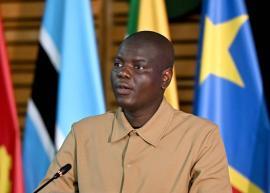
Delivering the outcome statement, South Africa’s International Relations and Cooperation (DIRCO) Minister Ronald Lamola said ministers had noted the growing risks posed by global instability, including the ongoing Middle East conflict, climate-related pressures, and disruptions to global supply chains.
“Ministers underscored the impact of intensifying geopolitical rivalry, including the current Middle-East conflict, climate-related pressures, and disruptions to global trade, energy, tourism, and financial systems, and noted that these factors are driving higher food and fuel prices, exchange-rate volatility, and increasing risks to food and energy security across Member States,” the statement read.
Ministers further reaffirmed their commitment to collective action to strengthen regional integration, enhance policy coherence and advance sustainable development across SADC member states.
They also committed to strengthening regional institutions and coordinated diplomacy to ensure a more unified SADC voice in global engagements.
The retreat deliberated on five key thematic areas, including financing regional integration, investment, public debt management and domestic revenue mobilisation; industrialisation, value chains and trade; infrastructure, transport and logistics; free movement of people, goods and services; energy, oil and gas; and agriculture and food security.
According to the outcome statement, ministers identified priority measures for collective action aimed at accelerating regional cooperation and implementation across these sectors.
“Ministers reaffirmed their shared commitment to strengthening regional solidarity, enhancing policy coherence, strengthening regional institutions, and deepening cooperation in order to build a more resilient, self-sustaining, and competitive SADC region,” the statement said.
They further agreed that the outcomes of the retreat should serve as a practical roadmap to strengthen accountability, coordination and implementation across member states.
The retreat also recommitted the region to advancing SADC Vision 2050, which sets out a long-term aspiration for a common future characterised by economic well-being, improved living standards, social justice, peace and security.
“The Retreat concluded with a renewed commitment to advancing the SADC Vision 2050, which envisions a Common Future within a regional community that ensures economic well-being, improved standards of living and quality of life, freedom, social justice, and peace and security for the people of Southern Africa,” the statement read.
The meeting concluded in Skukuza against the backdrop of the Kruger National Park’s vast wilderness, with ministers leaving the retreat having adopted what is expected to guide the region’s collective response to global uncertainty in the years ahead. – SAnews.gov.za


