


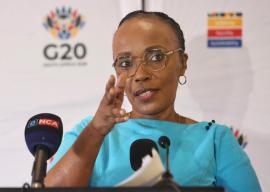
Minister in the Presidency responsible for Women, Youth and Persons with Disabilities, Sindisiwe Chikunga, has called for intensified and coordinated efforts across all sectors of society to tackle South Africa’s persistent youth unemployment challenge.
Chikunga said that as the country advances its development and transformation agenda, youth unemployment remains a critical barrier to inclusive growth, social cohesion and expanded economic opportunity.
The Women, Youth and Persons with Disabilities Department emphasised the need for stronger partnerships between government, the private sector and civil society to expand access to skills development, entrepreneurship opportunities, and sustainable employment pathways, particularly for young people from vulnerable and marginalised communities.
It noted President Cyril Ramaphosa’s emphasis on tackling youth unemployment, expanding access to skills development, and creating sustainable economic pathways, which affirms government’s broader recognition that youth empowerment is fundamental to inclusive growth and social transformation.
It highlighted the continued prioritisation of the Presidential Youth Employment Intervention (PYEI) and the expansion of public employment programmes as key steps towards bridging the gap between education and labour market participation.
Government has committed to strengthening policy implementation and mobilising resources, while calling on the private sector to increase investment in youth skills development, job creation and mentorship opportunities.
Civil society organisations have been encouraged to support community-based initiatives and provide mechanisms that assist young people in accessing opportunities.
Educational institutions have also been urged to align curricula with labour market demands and expand work-readiness programmes.
“By working together in these focused ways, stakeholders can deliver more effective and sustainable solutions to youth unemployment,” Chikunga said in a statement.
According to the latest Quarterly Labour Force Survey (QLFS) for the fourth quarter of 2025, released in February 2026, there has been a modest improvement in youth labour market outcomes.
The youth unemployment rate declined to 43.8%, down from 44.6% in the corresponding quarter of 2024. Youth employment increased by 44 000, while the number of unemployed young people fell by 172 000.
While these figures point to early signs of recovery and the potential impact of targeted interventions, the department warned that long-term trends underscore the need for sustained and systemic responses to address the root causes of youth joblessness.
Chikunga stressed that addressing youth unemployment requires sustained, coordinated action, including improved alignment between education and labour market needs, stronger support for entrepreneurship and innovation, and increased investment in youth-led initiatives that can drive inclusive growth and social transformation.
“As implementation continues, all stakeholders must play their part in empowering young people and building an economy that is responsive to the aspirations of the youth.
“The future of the country depends on how effectively we invest in, support, and include young people in national development. Government remains committed to working with young people to build a more inclusive, productive, and prosperous society,” the Minister said. – SAnews.gov.za


