


South Africa has called for renewed global cooperation to advance dignity, equality and sustainable development, as world leaders gather to address the challenges of a rapidly changing global landscape.
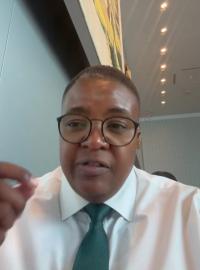
Delivering the country’s statement at the 59th session of the United Nations Commission on Population and Development (CPD59) in New York, Deputy Minister of Women, Youth and Persons with Disabilities, Steve Letsike, stressed the importance of collective global action in addressing the complex intersection of population dynamics, technology and development.
“We are working together and convening at this important session guided by the Programme of Action and the Living Global Compact, which continues to steer our shared pursuit of dignity, equality and sustainable development,” Letsike said on Monday.
Held under the theme: “Population, Technology and Research in the Context of Sustainable Development”, the session provides a platform for countries to share national experiences and policy approaches.
Letsike highlighted that demographic shifts, inequality and rapid technological transformation are reshaping development pathways globally and within South Africa.
She noted that these challenges are deeply rooted in lived realities shaped by the enduring legacies of apartheid, patriarchy and economic exclusion.
South Africa, she said, is characterised by a youthful population, with a median age of 28, and a growing ageing demographic, underscoring the need for inclusive, life-cycle-based development strategies.
“This reminds us that development cannot be fragmented — it must be approached across the full life cycle, anchored in human dignity,” she said.
The Deputy Minister outlined South Africa’s response as deliberate and inclusive, grounded in intersectional justice, reflecting the country’s constitutional commitment to substantive equality. This includes addressing inequalities linked to race, class, gender, culture, disability, geography and sexuality.
She emphasised that population issues are closely tied to broader questions of governance, knowledge creation and access to technology, and the risk of exclusion in an increasingly digital world.
“Our response as government is focused on investing in human capability and capital, while ensuring that no one is left behind,” Letsike said, highlighting initiatives to increase women’s participation in science, technology, innovation and research.
South Africa is also using technology to improve service delivery, strengthen governance and expand access to essential services.
Letsike pointed to legislative frameworks, such as data protection and cybercrime laws aimed at safeguarding users, particularly vulnerable groups in an increasingly digital world.
The Deputy Minister warned of the growing risks posed by harmful online trends, calling for coordinated, human rights-based responses to protect users while advancing development.
She reaffirmed that sexual and reproductive health and rights remain central to the country’s population agenda, which she described as “non-negotiable.”
“We recognise bodily autonomy, access to information and reproductive justice as fundamental to development,” she said.
South Africa continues to share its development experiences both domestically and across the African continent, while contributing to global development efforts under the leadership of President Cyril Ramaphosa.
In closing, Letsike called for renewed investment in research, data and innovation, universal access to sexual and reproductive health services, urgent efforts to bridge digital divides, and ethical governance of technology to protect human rights.
“We remain committed to working with all partners in the spirit of solidarity, equality and sustainability to ensure that technology serves humanity, and that no one, no community, is left behind,” she said.
The week-long CPD59 is led by the United Nations Population Fund (UNFPA), which is co-hosting a series of high-impact signature side events focused on how innovative technology and data-driven research are revolutionising approaches to population dynamics.
Expected outcomes of the session include the adoption of key resolutions, determining the theme for CPD61, and finalising the CPD60 agenda. – SAnews.gov.za


