


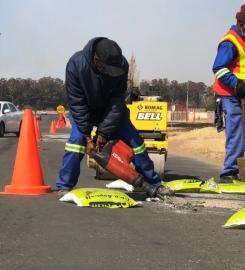
A total of R216 million has been allocated to address KwaZulu-Natal’s potholes, starting with a backlog of 3.12 million square metres across the provincial road network.
KwaZulu-Natal Premier Thamsanqa Ntuli made the announcement in his State of the Province Address on Friday, where he outlined an intensified road maintenance drive aimed at restoring safety and mobility.
To accelerate the programme, the province has secured 55 trucks and appointed more than 100 roadworker aides and supervisors dedicated to eradicating the potholes.
“This effort is to reduce the impact of potholes on vehicles, leading to punctures and wheel damage, traffic congestion and delays. This would assist in reducing the risk of accidents, including fatalities, improve mobility, and economic activity in the province,” Ntuli said.
The intervention forms part of a broader infrastructure-led growth strategy, with R4.11 billion earmarked for the public sector-led infrastructure investment programme in the upcoming financial year.
In addition, projects led by the South African National Roads Agency Limited (SANRAL) account for R3.6 billion in spending directed to small, medium and micro enterprises (SMMEs), with 6 842 jobs created to date.
Ntuli emphasised that addressing bulk services supply constraints is critical to unlocking delayed projects. The province will strengthen its “one stop shop” to resolve bottlenecks in statutory approvals, including compliance with the Spatial Planning and Land Use Management Act, water use licences and funding processes. The aim is to accelerate infrastructure rollout while providing certainty to investors.
The Premier added that clearer directives would be issued to the private sector and municipalities to incentivise infrastructure investment, including awareness of potential rate rebates and discount holidays during investment periods.
He said strengthening land agreements with the Ingonyama Trust Board is also a priority to ease approval processes and fast-track development in affected areas.
Across districts, infrastructure projects are advancing in key sectors such as agriculture, manufacturing, mining and infrastructure development. In uMgungundlovu, 12 projects valued at R24 billion are underway, while uThukela hosts six projects worth R38 billion, and uMzinyathi has seven projects valued at R1.6 billion.
In Amajuba, 15 projects amounting to R1 billion are progressing, while Zululand has seven projects valued at R1.7 billion. uMkhanyakude leads in project numbers with 25 projects worth R5 billion. King Cetshwayo has eight projects valued at R44 billion, and Ugu accounts for 17 projects totalling R13.2 billion.
Transformation
Ntuli said transforming the construction and infrastructure sector is central to inclusive growth.
“The transformation of the build economy is not optional; it is imperative,” he said, noting that women’s participation in the sector must expand beyond beneficiary status to leadership and decision-making roles.
In the third quarter of 2025 alone, women-owned companies benefited from projects valued at R35.5 million, contributing to a cumulative R62 million spent across 98 projects awarded to 84 women contractors. This translates to 35.3% women's empowerment achieved within the infrastructure portfolio.
Infrastructure delivery has also accelerated, with 70 out of 100 planned capital projects completed, creating approximately 5 000 jobs.
Through the Expanded Public Works Programme (EPWP), 128 906 work opportunities were created, including 96 698 for women, 39 330 for youth and 734 for persons with disabilities.
Capacity building for emerging contractors remains a focus. Of the71 contractors trained during the review period, 49 were women.
In the uMzinyathi District, 38 women participated in a bricklaying workshop conducted in partnership with Corobrik, while 11 women in Amajuba attended an Emerging Contractor Training Programme.
Key projects
Key social infrastructure projects are progressing across the province, with Mahlabathini Primary School in Zululand District undergoing a R78 million upgrade, while in uMzinyathi, the Cwaka Clinic is being developed at a cost of R87 million, and Mosvold Hospital in uMkhanyakude is receiving a R200 million expansion.
King Dinizulu Hospital is developing a new tuberculosis complex, and Ngwelezane Hospital in King Cetshwayo District is being upgraded at a cost of R63 million. Governance and economic infrastructure projects include the new Nongoma RTI offices, valued at R98 million, and the Paulpietersburg Agricultural Offices, valued at R42 million.
Collectively, Ntuli said, these projects are expected to generate more than 1 000 job opportunities during implementation, while stimulating local enterprises.
Road infrastructure remains a pillar of connectivity
Ntuli emphasised that road infrastructure remains a central pillar of the province’s connectivity strategy, with progress being recorded on major corridors, including the P304 from KwaMiya to the Drakensberg (25% complete at R177.8 million) and the P31 between Marburg and Port Shepstone (13% complete at R775 million).
Tourism-linked routes such as the P372 Heritage Tourism Roads project are advancing, alongside inland corridors including the P7-4 between Bulwer and Underberg and the P230 Umlalazi Drift Rehabilitation project. In northern KwaZulu-Natal, the P47/3 Melmoth and P90 in Nkandla projects are improving accessibility in historically underserved areas.
Under the Vukayibambe programme, routine maintenance has created 3120 jobs towards a target of 3 350. Bailey bridge construction across multiple districts has further enhanced rural mobility, while the Provincial Road Maintenance Grant has allocated R269 million, R969 million and R1 billion over the medium-term framework to sustain road upkeep. – SAnews.gov.za


