


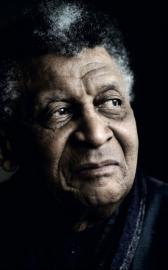
President Cyril Ramaphosa has expressed profound sadness at the passing of cultural activist, global jazz icon and member of the Order of Ikhamanga, Abdullah Ibrahim.
“Our nation mourns the passing of an international icon and global citizen whose profound creations honoured the South Africa that shaped his political commitment and musical brilliance,” the President said on Monday in a statement.
Ibrahim passed away at the age of 91, concluding a life in music that spanned jazz genres and geographies.
As a pianist, composer, arranger and mentor, Ibrahim campaigned against apartheid.
He drew audiences to his carefully curated performances, which showcased both his accomplishment as a soloist and his collaborations with established and emerging talent.
His music also reflected his spirituality and contemplative practice of martial arts.
In 2009, he was awarded the Order of Ikhamanga in Silver in recognition of his outstanding contribution to the arts, his success in placing South African music on the international map, and his lifelong fight against racism and apartheid.
“As we commemorate the 50th anniversary of the Youth Uprising, the passing of Abdullah Ibrahim reminds us of the then illegal benefit concert he organised in support of the liberation movement following the Uprising, as a demonstration of his commitment to our struggle.
“We give thanks for the many decades of his life that he devoted to his personal passion which he shared with humanity through his recordings and his appearances in clubs and concert halls throughout the globe.
“He has enriched our lives with his musical gifts and his involvement in making the world a better place. May his soul rest in peace,” the President said.
He offered his deepest condolences to Ibrahim’s children, pianist Tsakwe and hip-hop artist Jean Grae.
Their mother, Sathima Bea Benjamin, a performer and recording artist in her own right, passed away in 2013, nine years after she received the Order of Ikhamanga.
Gauteng MEC for Education, Sport, Arts, Culture and Recreation Lebogang Maile said South Africa had lost a giant whose music transcended entertainment and became a powerful instrument of consciousness, resistance and hope.
“Ibrahim did not merely play jazz; he gave sound to the aspirations of oppressed people and helped the world hear the pain, resilience and dignity of South Africans during the darkest years of apartheid.
“Through Mannenberg, he reminded the world that music can be a weapon against injustice and a beacon of hope for those yearning for freedom. His melodies carried the spirit of a people who refused to surrender their humanity,” Maile said.
The MEC added that South Africa’s rich jazz heritage owes much to Ibrahim’s pioneering work, which elevated South African jazz onto the global stage while remaining deeply rooted in the rhythms, traditions and stories of home.
He noted the transformative role jazz played in shaping township culture and intellectual life in communities such as Alexandra, Sophiatown and Soweto.
“Jazz clubs, community halls and township gatherings became spaces where ideas flourished, identities were affirmed, and consciousness was raised.
“Jazz nurtured creativity, encouraged critical thought and provided communities with a sense of pride and belonging. Ibrahim stood at the centre of that cultural awakening, inspiring generations of artists, thinkers and ordinary citizens,” Maile said. -SAnews.gov.za


