


By William Baloyi
For generations, spaza shops have been an integral part of South Africa’s township and rural communities, reflecting the resilience, entrepreneurial spirit and determination of ordinary people to create economic opportunities despite challenging circumstances.
During apartheid, restrictive spatial planning, economic exclusion and limited access to formal business opportunities forced many black entrepreneurs to find alternative ways of earning a livelihood. Spaza shops emerged as important community-based enterprises, providing essential goods and services in townships and rural areas where access to larger retail outlets was limited. They became more than retail outlets; they served as gathering points within communities and symbols of economic resilience and self-reliance.
Following the advent of democracy in 1994, spaza shops continued to play a significant role in expanding economic participation and supporting local livelihoods. As South Africa pursued inclusive growth and township economic development, these businesses became recognised as an important part of the informal economy, creating opportunities for entrepreneurship, household income generation and local supply chains.
Today, spaza shops remain a vital part of everyday life for millions of South Africans. They provide convenient access to essential goods, support local employment and contribute to the circulation of money within communities. For many entrepreneurs, operating a spaza shop represents a pathway towards financial independence and business ownership. However, many continue to face challenges, including limited access to finance, infrastructure constraints, compliance requirements, competition pressures and difficulties accessing formal markets.
Supporting the growth and sustainability of spaza shops is therefore not only about strengthening individual businesses; it is about empowering communities, expanding economic participation and ensuring that township and rural economies become active contributors to South Africa’s broader development journey.
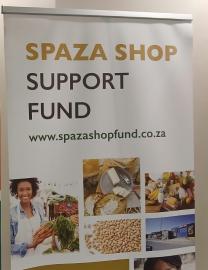
To advance this objective, government is investing R500 million through the Spaza Shop Support Fund, a targeted intervention aimed at strengthening locally owned spaza shops by helping them formalise their operations, meet regulatory requirements, enhance their competitiveness and transition from survivalist businesses into sustainable enterprises that contribute to local economic growth and community development.
This work forms part of the broader journey of building a more inclusive society, as reflected in government’s “Milestones of Freedom Campaign,” which commemorates the progress South Africa has made since the adoption of the Freedom Charter while recognising the work that remains to be done.
The “Milestones of Freedom Campaign” reminds us that the ideals fought for by generations of freedom fighters, including equality, economic opportunity and the empowerment of ordinary South Africans, must continue to guide our efforts to address historical inequalities and expand meaningful participation in the economy. Supporting township entrepreneurs and creating opportunities for communities to build sustainable livelihoods is therefore a continuation of the struggle for a more just and prosperous South Africa.
Through the fund, qualifying spaza shop owners can receive financial and non-financial support to improve stock levels, upgrade business infrastructure, strengthen compliance and build skills in areas such as business management, financial literacy and digital systems. To date, 4522 complete applications have been received nationally, of which 4240 have been assessed.
The programme is led by the Department of Small Business Development (DSBD) and the Department of Trade, Industry and Competition (dtic), and implemented through the Small Enterprise Development and Finance Agency (SEDFA) and the National Empowerment Fund (NEF).
The impact of this intervention is already being realised, with 2369 spaza shops and food-handling businesses approved for support through the fund. These businesses are receiving assistance to improve their operations, strengthen compliance with regulatory requirements and build more sustainable enterprises. The support provided demonstrates government’s commitment to ensuring that township and rural entrepreneurs have access to the resources needed to grow their businesses, create livelihoods and contribute meaningfully to local economic development.
While progress of the Spaza Shop Support Fund is encouraging, government recognises that many small businesses continue to face challenges that affect their ability to formalise and grow. One of the key barriers has been the delay in obtaining municipal trading permits and licences, which are essential for businesses to operate within the formal economy and access certain forms of support. These delays can prevent qualifying entrepreneurs from meeting compliance requirements and limit their ability to benefit fully from available opportunities.
To address these challenges, government is working with municipalities and sector partners to streamline licensing processes, promote the use of digital systems, strengthen coordination between spheres of government and explore measures such as conditional or temporary permits to assist qualifying businesses while compliance processes are being finalised.
Young entrepreneurs who are interested in growing their spaza shops can apply for support through the Spaza Shop Support Fund by submitting their applications through the official application channels managed by the NEF and the SEDFA. The Fund prioritises youth entrepreneurs between the ages of 18 and 35, as well as women-owned enterprises and businesses owned by persons with disabilities. To qualify, applicants must operate spaza shops in rural or township areas that serve local communities, and the owner must be a South African citizen or have been naturalised as a South African citizen before 1994.
*Baloyi is the Deputy Government Spokesperson


