


New York, USA — India, Brazil and South Africa have reaffirmed the role of the India-Brazil-South Africa (IBSA) Dialogue Forum as a vehicle for strengthening South-South cooperation and advancing a more representative multilateral system amid growing global geopolitical and economic challenges.
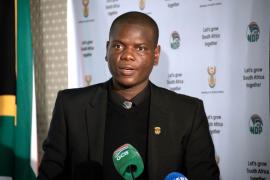
The three countries made the commitment during an IBSA Ministerial Meeting hosted by South Africa on the sidelines of the 81st United Nations General Assembly in New York on Thursday, where International Relations and Cooperation Minister Ronald Lamola chaired discussions with Brazil’s Foreign Minister, Mauro Vieira and India’s Foreign Minister, Subrahmanyam Jaishankar.
South Africa assumed the IBSA chairship for 2026–2027, placing the forum’s priorities within its broader emphasis on peace, development, multilateralism and reform of global governance.
IBSA was established in 2003 as a trilateral forum bringing together three major democracies and developing economies from Africa, Asia and Latin America. The forum also operates the IBSA Fund for the Alleviation of Hunger and Poverty, which supports South-South development projects in developing countries.
IBSA as a platform for a changing world
Opening the meeting, Lamola said South Africa had assumed the chairship with an understanding of both the responsibility attached to the platform and the work undertaken by the three countries over more than two decades.
“As like-minded emerging economies, we recognise that we have a collective role to play in addressing and correcting the imbalances in the global economy,” Lamola said.
He stressed that IBSA was not directed against other countries but was a platform through which the three countries could advance shared principles and contribute to global governance reform.
“IBSA is not a bloc; it's not an alliance against anyone. It is a conversation amongst three democracies of the South, three continents and three regions, three great civilisations, who came to view that the world as it is organised does not reflect the world as it actually is,” the Minister said.
Lamola said the current international environment had placed pressure on the principles underpinning multilateral cooperation, including respect for the UN Charter, international law and international humanitarian law.
“IBSA exists precisely for this. This is an important platform to strengthen and uphold the United Nations Charter, multilateralism, international law, and international humanitarian law,” he said.
He added that defending the existing system was not sufficient and that IBSA should also contribute to reforming global governance.
“We must advance the reform of global governance in the direction of more just, equitable, and representative international and multilateral system, a Security Council that reflects the world of today, rather than the world of 1945,” the Minister said.
Lamola said this should extend to international financial institutions and the global trading system, with rules applied consistently and equitably.
Peace, development and practical cooperation
South Africa has placed “peace, prosperity and development” at the centre of its IBSA chairship, drawing the theme from the forum's founding principles.
Lamola said the chairship would focus on political engagement, technical cooperation through IBSA working groups and people-to-people exchanges, as well as practical development projects through the IBSA Fund.
Among the priorities are cooperation on sustainable energy and ensuring that energy transitions are financed in a manner that does not place developing countries in an impossible position.
The countries will also deepen cooperation on poverty alleviation and zero hunger, strengthen foundational learning and future skills, and accelerate cooperation on new technologies.
Lamola called for the three countries to align their respective priorities into a common work programme.
“We are also aware of the important priorities of Brazil and India. Let us integrate this into one work programme for the coming year, which we can pursue through the working groups,” the Minister said.
He said South Africa would also review the existing IBSA working groups to ensure they support the forum's strategic objectives.
Brazil backs stronger IBSA coordination
Vieira said IBSA brought together three major democracies from three continents with shared principles and the capacity to contribute to a fairer international order.
“Few partnerships embody the diversity and political weight of the global South as IBSA, a bridge across three continents, bringing together three major democracies with shared values and a common commitment to building a fairer international order,” Vieira said.
He said the international system is facing pressure from the growing use of unilateral measures and the erosion of established multilateral rules.
Vieira highlighted trade as a particular area requiring stronger multilateral cooperation, warning against the proliferation of tariffs and non-tariff measures that can disrupt trade and investment.
“Trade must not become an instrument of political pressure or geopolitical rivalry,” he emphasised.
Brazil, India and South Africa, he said, should work together to defend a transparent and rules-based multilateral trading system centred on the World Trade Organisation.
Vieira also supported reform of the UN Security Council, arguing that developing countries should have a greater presence in both permanent and non-permanent categories.
“A Security Council that does not adequately represent Africa, Asia and Latin America cannot fully reflect the world on whose behalf it is expected to act,” he said.
He further called for stronger representation in global economic governance and stressed the importance of South Africa's participation in the G20.
Tackling hunger, poverty and inequality
The IBSA partners also highlighted the forum's development work as an example of practical South-South cooperation.
Vieira said the IBSA Fund demonstrated how developing countries could cooperate through locally owned initiatives rather than conditional assistance.
“South-owned, South-led and driven by local needs,” he said.
He proposed closer alignment between the IBSA Fund and the Global Alliance against Hunger and Poverty to strengthen international efforts to address hunger and poverty.
Brazil also backed the proposed International Panel on Inequality (IPI), an initiative being advanced by Brazil, South Africa, Spain and Norway.
“At a time when inequality is testing public trust in institutions, the IPI represents a timely and necessary initiative, one that can help chart a path towards more equitable and resilient societies,” Vieira said.
The issue of inequality has been a major theme of South Africa's multilateral diplomacy, including during its 2025 G20 Presidency, and remains prominent in its engagement at UNGA81.
India highlights AI, climate and Security Council reform
The Indian delegation similarly backed deeper IBSA cooperation, particularly in development, technology, climate action and reform of global governance.
India highlighted the IBSA Fund's contribution to South-South cooperation, noting that projects have supported areas, including education, health, women's empowerment and solar energy.
The delegation also proposed greater cooperation between the three countries on digital public infrastructure and artificial intelligence, including the possible development of an IBSA Digital Innovation Alliance through which the countries could share experiences and best practice.
The Indian side stressed that AI should be developed responsibly and that developing countries should participate meaningfully in shaping emerging technologies.
“IBSA can assume a leading role in emerging technologies, particularly in the areas of digital public infrastructure and artificial intelligence,” the delegation said.
Climate change was also identified as a key area for cooperation, with India emphasising the need for developing countries to have access to affordable finance and technology to meet their climate goals.
On global governance, India joined the call for comprehensive and time-bound reform of the UN Security Council.
“We must work collectively towards expanding the UN Security Council in both categories in a time-bound manner to make it more democratic, representative, protective and efficient,” the delegation said.
From dialogue to delivery
Lamola said preparations are underway for a senior officials' meeting in October 2026, with a possible virtual IBSA Leaders Meeting in 2027 and an eventual IBSA Leaders’ Summit at a mutually agreed time and venue.
“As the chair of IBSA, South Africa will continue to steer the ship for the benefit of the global South and our peoples,” he said.
The meeting comes as South Africa uses its wider multilateral engagements during UNGA81 to advance reform of global governance, strengthen South-South cooperation and advocate for greater representation of developing countries in international institutions. – SAnews.gov.za


