


South Africa’s drive to build sustainable, inclusive and resilient human settlements has received a major boost with the launch of a dedicated UN-Habitat Country Office in the country.
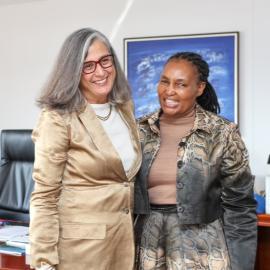
Human Settlements Minister Thembi Simelane and UN-Habitat Executive Director Anacláudia Rossbach officially launched the office in the City of Tshwane, Gauteng, on Friday, marking a new chapter in the longstanding partnership between South Africa and the United Nations agency.
Simelane described the establishment of the country office as a significant step towards strengthening efforts to transform human settlements, upgrade informal settlements and advance sustainable urbanisation.
She said the office would help integrate sustainable urbanisation and human settlements development into the broader United Nations Sustainable Development Cooperation Framework, while providing additional support to South Africa’s national priorities.
Through its collaboration with UN-Habitat, South Africa has gained international recognition for its efforts to provide adequate housing and upgrade informal settlements.
“With the unwavering support of UN-Habitat, our country stands as a vocal champion for the transformation and upgrading of informal settlements, addressing poverty, ensuring adequate shelter, and delivering essential services to our people,” Simelane said.
Established in 1975, UN-Habitat supports transformative change in cities and human settlements around the world through knowledge sharing, policy advice, technical assistance and collaborative action.
Simelane said the UN-Habitat Country Programme for South Africa, adopted in September 2023 following extensive consultations with stakeholders in the human settlements sector, is aligned with the country’s national priorities and government’s constitutional mandate to provide adequate housing.
The programme is aligned with the National Development Plan, particularly Chapter 8 on transforming human settlements and Chapter 12 on building safer communities.
It also supports the Medium-Term Development Plan 2024-2029, particularly Priority 2, which focuses on reducing poverty and tackling the high cost of living.
“The Country Programme offers additional impetus, guidance, and support from UN-Habitat to augment the implementation of policies and initiatives related to spatial integration, the development of sustainable, inclusive, and resilient human settlements, and capacity-building within local government,” Simelane said.
She said the programme further supports the Comprehensive Plan for the Creation of Sustainable Human Settlements, which seeks to provide adequate living environments and shelter for all through the transformation of informal settlements and improvement of substandard housing conditions.
Strengthening regional cooperation
Beyond supporting South Africa’s domestic human settlements agenda, Simelane said the partnership with UN-Habitat could help strengthen the continent’s urban development agenda and contribute to the implementation of Agenda 2063 – The Africa We Want.
“It serves as a springboard for establishing a Southern African Development Community (SADC) consolidated agenda on human settlements, thereby filling a critical gap in current SADC regional development programmes,” she said.
The launch builds on several years of cooperation between South Africa and UN-Habitat.
In October 2022, the then Human Settlements Minister hosted former UN-Habitat Executive Director Maimunah Mohd Sharif. The visit resulted in the adoption of the Global Action Plan on Accelerating the Transformation of Informal Settlements and Slums.
The two sides also signed a Memorandum of Understanding to strengthen cooperation on the implementation of the Sustainable Development Goals (SDGs) and the New Urban Agenda in South Africa.
Discussions during the visit included plans to establish a dedicated UN-Habitat Country Office.
Simelane said the newly launched office would now provide a stronger platform for collaboration between government, UN-Habitat, other United Nations agencies, development partners and stakeholders across the human settlements sector.
The Country Programme seeks to:
- Strengthen collaboration between government, UN-Habitat, UN agencies, development partners and other human settlements stakeholders;
- Promote integrated and cross-sectoral urban interventions that accelerate progress towards national and global development goals;
- Capture lessons and global best practices to inform new partnerships and programmes;
- Identify contextual challenges and opportunities and develop catalytic solutions rooted in international experience and local realities, and
- Strengthen the capacity of national and subnational institutions to improve urban management and development.
Simelane called on all stakeholders to use the new platform to deepen their commitment to creating human settlements where communities can live safely, inclusively and with dignity.
“Let us reaffirm our collective commitment to the vision of sustainable, inclusive, prosperous human settlements and leave no one behind,” she said. – SAnews.gov.za


