


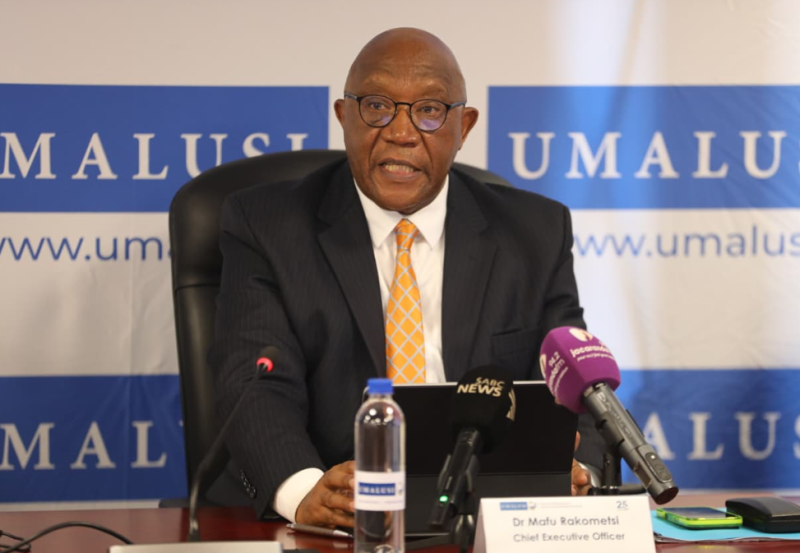
Umalusi CEO Dr Mafu Rakometsi has confirmed the broad readiness of the Department of Basic Education (DBE), Department of Higher Education and Training (DHET), Independent Examinations Board (IEB) and South African Comprehensive Assessment Institute (SACAI) to administer the 2026 year-end examinations.
Rakometsi led a media briefing on the state of readiness in Pretoria on Thursday.
A total of 1 079 879 candidates will sit for the General Education and Training Certificate: Adult Basic Education and Training (GETC: ABET), National Certificate (Vocational) [NC(V)] Level 4 and National Senior Certificate (NSC) examinations.
Umalusi conducted its state of readiness audit from 24 August to 30 September 2026, with exams slated to commence on 13 October.
“The audit covered candidate registration; staffing at examination and marking centres; external moderation of internal assessments and question papers; security measures for printing, packaging, storage and distribution of question papers; mark-capturing systems, and structures for managing examination irregularities.
“On the evidence presented, Umalusi is satisfied that the system is broadly ready to conduct, administer and manage the 2026 year-end national examinations, which will involve approximately 1.08 million candidates at 9 183 examination centres,” Rakometsi explained.
Additionally, where concerns remain, “corrective measures are being implemented by assessment bodies and closely monitored”.
“The areas of concern identified are not systemic and do not threaten the overall credibility or integrity of the 2026 examinations. The responsible assessment bodies have been instructed to implement corrective measures before the examinations begin.
“Umalusi will continue to monitor the DBE’s measures to address marker capacity in Afrikaans Home Language, English Home Language and History,” Rakometsi said.
Moderation
In its assessment of readiness, Umalusi conducted external moderation on “all institution-based assessment tasks and question papers to be administered” during the examination period.
“Moderation is a critical safeguard for fair, reliable and valid examinations. Umalusi externally moderated and approved 283 subject question papers across three qualifications and four assessment bodies, confirming their validity, fairness and reliability.
“Umalusi has received final subject entries from the assessment bodies. The registration data received shows that approximately 1.08 million candidates are registered for the 2026 year-end examinations, with the largest share of about 92% of the total candidature being accounted for by the NSC. All candidates have received their examination admission letters and timetables,” Rakometsi stated.
Concessions and accommodations, such as extra time, adaptation of question papers into Braille and large prints, have been granted to “eligible candidates in accordance with applicable policies and regulations,” Rakometsi said.
Candidates will write at 9 183 examination centres, which have also been evaluated.
“While a desktop evaluation method was employed for all the existing centres, a physical audit was conducted for new examination centres.
“All the centres have been profiled according to their risk levels from low, medium and high risk centres. Resident monitors will be deployed to high risk centres, supported by regular Umalusi monitoring. This will complement the measures to be implemented by each assessment body,” Rakometsi stated.
The logistics
The CEO confirmed that examination material is currently in printing, according to approved plans.
“Security protocols for the printing, packaging, storage and distribution of question papers and related materials are the aspects of Umalusi’s quality assurance work, which are not discussed publicly due to their confidential nature.
“Umalusi is satisfied that adequate plans are in place to secure the entire value chain. Regular visits will be made to all assessment bodies,” Rakometsi said.
All submitted question papers and institution-based assessment tasks have been approved after confirmation that they have been designed “in accordance with the standards for each qualification and complied with the relevant quality-assurance requirements”.
“The papers will be distributed to the approved examination centres in accordance with the approved plans.
“Candidates have been registered in line with the relevant regulations, and eligible candidates have received concessions and accommodations in accordance with applicable policies,” Rakometsi assured.
Invigilation staff have been adequately trained to execute duties related to “conduct, administration and management” of the exams.
“Concerning marking personnel, Umalusi is satisfied that the assessment bodies have sufficient marking capacity. Although the DBE reported marker shortages in Afrikaans Home Language, English Home Language and History, Umalusi is confident that the DBE’s plan to start marking early and phase the process will adequately mitigate the risk.
“Because the DHET will finalise its marker appointment process later in this month, Umalusi will be able to pronounce on the marking capacity of the DHET on or before 19 October,” Rakometsi noted.
The mark-capturing systems used by all four assessment bodies are also in compliance with Umalusi’s requirements.
Each body will use a double-entry process with one official capturing the marks and another verifying them. All mark capturers will be trained before the process begins.
Looking ahead
As examinations are written, Umalusi will monitor the writing process itself, as well the marking of sampled scripts and “verify marking in sampled subjects to ensure accuracy and reliability”.
Following the exams, the quality assurance body will standardise the exam results.
“The final quality assurance phase is approval of the results by the Executive Committee (EXCO) of Council.
“Under section 17A(5)(b) of the General and Further Education and Training Quality Assurance Act, EXCO must satisfy itself that assessment bodies have: (i) conducted the assessment, free from any irregularity that may jeopardise the integrity of the assessment or its outcomes, and (ii) complied with the requirements prescribed by the Council for conducting assessments.
“The foregoing quality assurance processes are intended to ensure that assessments and examinations comply with the governing regulations and that Umalusi-issued certificates retain the highest levels of credibility and integrity,” Rakometsi stated.
The CEO wished the candidates well ahead of the start of exams on 13 October.
"Umalusi wishes the Class of 2026 strength and determination as candidates enter the final stage of their journey through the general and further education and training system.
“Our advice to you: approach these examinations with confidence, discipline and integrity. This is the final stage of an important journey, and the country wishes you every success,” Rakometsi concluded. – SAnews.gov.za


