

The City of Tshwane has stepped up interventions to stabilise water supply across affected communities, including targeted overnight water restrictions, increased tanker distribution in Ekangala and continued monitoring of water quality in Hammanskraal and Bronkhorstspruit.
Executive Mayor Nasiphi Moya said the city has established a daily evening Water Management Committee to coordinate responses to the multiple water-related challenges affecting the municipality.
In a statement issued on Monday after the committee meeting, Moya said the challenges include the ongoing water contamination crisis in Bronkhorstspruit, water quality concerns in Hammanskraal, infrastructure failures, and supply restrictions in other parts of Tshwane.
The committee brings together senior officials and technical teams to assess developments, coordinate interventions and monitor progress across the affected water systems.
Moya acknowledged the frustration and hardship caused by prolonged water interruptions, particularly for households that had been without water for several days.
She said the city is working with Rand Water to stabilise supply in affected areas, particularly Garsfontein and Klapperkop, where critically low reservoir levels continue to affect communities.
“These challenges have been compounded by a combination of infrastructure failures, reduced bulk water supply and exceptionally high consumption, which has prevented reservoirs from recovering sufficiently,” Moya said.
Production at the Roodeplaat Water Treatment Plant has resumed, following repairs to electrical infrastructure. This is expected to help restore supply to communities served by the Montana system and ease pressure on other parts of the network.
“As part of our coordinated response, the city is implementing targeted overnight restrictions to 14 reservoirs with adequate storage but exceptionally high consumption. These measures are intended to reduce demand on Rand Water’s upstream system and support the recovery of critically depleted reservoirs,” the mayor said.
Moya acknowledged that the restrictions will cause temporary inconvenience to more residents, but that they are necessary to support recovery across the broader network, particularly for communities that have experienced prolonged interruptions.
She also clarified that a video circulating on social media showing a major water leak in Garsfontein is outdated, as the pipe failure was repaired the previous week.
“There is currently no major leak at Garsfontein. The current supply challenges are primarily the result of critically depleted reservoir levels, reduced supply from Rand Water and high water consumption, rather than an ongoing major leak.”
Emergency response in Bronkhorstspruit
In Bronkhorstspruit, Moya said Rand Water continues to lead the rehabilitation programme at the water treatment works, while the city maintains alternative water provision and public health monitoring.
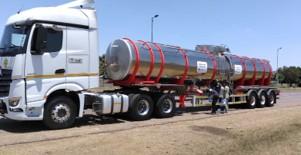
Following concerns about the reliability and fairness of water tanker distribution, particularly in Ekangala, she said the city is reorganising its distribution arrangements.
“Distribution arrangements are being reorganised, with nine tankers scheduled to serve Ekangala from [today]. A centralised coordination point is also being established to improve route management and ensure that affected communities receive more consistent access to water,” Moya said.
The city has also completed cleaning emergency water storage tanks at clinics. The tanks are awaiting water quality testing before being brought into use, while the cleaning of additional community storage facilities is scheduled to begin in Ekangala.
Moya said oversight of alternative water provision has also been strengthened to ensure that water distributed to affected communities meets the required health and safety standards.
“Independent private water tanker operators wishing to assist affected communities are required to obtain verification and authorisation from the city before distributing water. This includes water quality testing by our Environmental Health Practitioners, while the Tshwane Metro Police Department will conduct compliance checks to ensure that operators meet the necessary requirements,” the mayor said.
In the Pretoria CBD, the city has resolved the contamination incident affecting Findlay Reservoir following the isolation of the affected groundwater source, the introduction of alternative supply, reservoir cleaning and further testing.
According to Moya, the water was confirmed safe for consumption, and the 'boil water' advisory was lifted on 24 October.
“Further work continues to address the underlying infrastructure failure affecting the Fountains groundwater source.”
In Hammanskraal, the city has started introducing water from the Klipdrift package plant into the affected Phase 3 network.
However, Moya noted that microbiological non-compliance remains a concern, with network flushing and water quality monitoring continuing.
“The existing unsafe water advisories in Hammanskraal Phase 3 and Bronkhorstspruit remain in place. Residents in these areas must continue using authorised alternative water supplies until the water has been confirmed safe,” Moya said – SAnews.gov.za


