


By Nosihle Shelembe
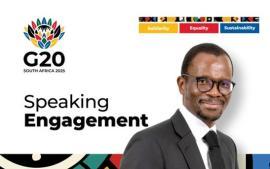
Sovereign Wealth Funds (SWFs) have the potential to help bridge the continent’s infrastructure financing gap, enabling industrialisation, infrastructure expansion and social development, says Deputy Minister of Finance, Dr David Masondo.
With Sub-Saharan African countries only allocating 3.5% of Gross Domestic Product (GDP) to infrastructure annually, it falls short of the 7.1% required to meet the Sustainable Development Goals (SDGs).
SDGs are aimed at tackling a wide range of global issues, including those related to poverty, health, education, water and sanitation, energy, inequality, climate, environmental degradation, prosperity, and peace and justice.
Infrastructure development plays a key role in the SDG agenda, with three goals focused directly on addressing infrastructure-related challenges in water, sanitation and hygiene; energy; and industrialisation.
“The continent faces an estimated infrastructure funding gap of US$130–170 billion per year, yet only US$80 billion is currently accessible. Traditional financing mechanisms like national budgets, development finance, or concessional loans, are insufficient on their own.
“What is required is a new mix of capital and a new appetite for risk-sharing, where SWFs become catalytic investors rather than passive reserve custodians. This need is further amplified by shifts in the global development finance landscape,” the Deputy Minister said on Monday.
Masondo highlighted the role that Sovereign Wealth Funds could play in accelerating development on the African continent during the Group Twenty (G20) Social Summit side event in Ekurhuleni, noting also that Official Development Assistance is projected to decline sharply.
According to the International Monetary Fund (IMF), there is a 7% drop or US$4.2 billion, in external funding to Sub-Saharan Africa.
“At the same time, low levels of economic diversification, high informality and slowing growth continue to constrain tax revenue. In this environment, development financing must evolve. It is therefore no surprise that more African countries are exploring or establishing SWFs to promote investment, stabilise fiscal systems, and leverage global partnerships,” he said.
When appropriately structured and governed, SWFs offer several unique advantages for Africa’s development trajectory.
“They strengthen resilience against commodity price volatility, support intergenerational wealth transfer, and reduce exposure to volatile external markets.
“They can crowd-in foreign direct investment, promote industrialisation, and create opportunities for domestic businesses and workers, particularly in marginalised communities.
“A well-designed SWF model also aligns strongly with Agenda 2063, prioritising infrastructure, industrialisation, technology development and a just transition to a green economy,” Masondo said.
He emphasised that SWFs can also unlock Africa’s green industrial opportunity.
With long-term mandates, these funds are well positioned to invest in renewable energy including solar, wind, hydro and green hydrogen and in sustainable agriculture, circular-economy industries and climate-resilient infrastructure.
“These investments deliver financial returns while advancing energy security, climate action, jobs and inclusive growth. Across the continent, we are seeing encouraging examples: Morocco’s Green Growth Infrastructure Facility, Senegal’s FONSIS [the Sovereign Wealth Fund of Senegal for Strategic Investments], and new frameworks emerging in Angola and Nigeria dedicated to social impact and strategic industries,” the Deputy Minister said.
South Africa has placed this agenda firmly on the table during its G20 Presidency, advocating for the establishment of more African SWFs and for greater visibility of Africa’s development financing needs within global financial governance.
“Our message was unmistakable: Africa does not lack ideas, opportunities, or ambition, it lacks access to predictable, affordable and long-term capital. SWFs can be an important part of the solution.
“Over the past two decades, the global Sovereign Wealth Fund (SWF) ecosystem has grown remarkably in number, assets and sophistication. By 2023, SWF assets expanded by 14%, reaching US$13 trillion, up from US$11.6 trillion in 2022.
“In Africa, however, SWFs collectively account for just 0.24% of global SWF assets. Their scale may be modest, but their potential impact for Africa’s industrialisation, infrastructure expansion and social development is immense. Nowhere is this potential more urgent than in bridging the infrastructure financing gap,” he said.
The Deputy Minister called for designing SWFs that are transparent, professionally governed and socially impactful.
“We must promote Environmental, Social and Governance (ESG) and social outcomes alongside financial returns. We must build partnerships with global sovereign investors, multilateral financial institutions and private capital, which deliver results on the ground for communities, workers and households.
“If we succeed, SWFs can become more than financial instruments. They can become vehicles of dignity and could be used in funding hospitals, schools, infrastructure, affordable energy, resilient cities and new industries that allow young Africans to thrive,” Masondo said.
South Africa is hosting the G20 Social Summit from 18 to 20 November 2025 at the Birchwood Hotel and OR Tambo Conference Centre in Ekurhuleni, Gauteng Province.
Th summit brings together a wide spectrum of stakeholders including governments, civil society, labour, youth, women, persons with disabilities, philanthropy, and grassroots organisations ensuring that the lived experiences of ordinary people shape the outcomes of the G20 process.
The event is being held as part of the South Africa’s G20 Presidency, under the theme: “Solidarity, Equality, and Sustainability.”
The G20 Social Summit will convene formal and informal networks, including youth movements, women’s organisations, faith-based groups, organisations of persons with disabilities, community forums, and other grassroots structures.
Together, they will engage on global issues that directly impact people’s daily lives.
The G20 Social Summit seeks to elevate issues of social development, equity, and inclusion to the same level of priority as macroeconomic and financial matters. -SAnews.gov.za


