


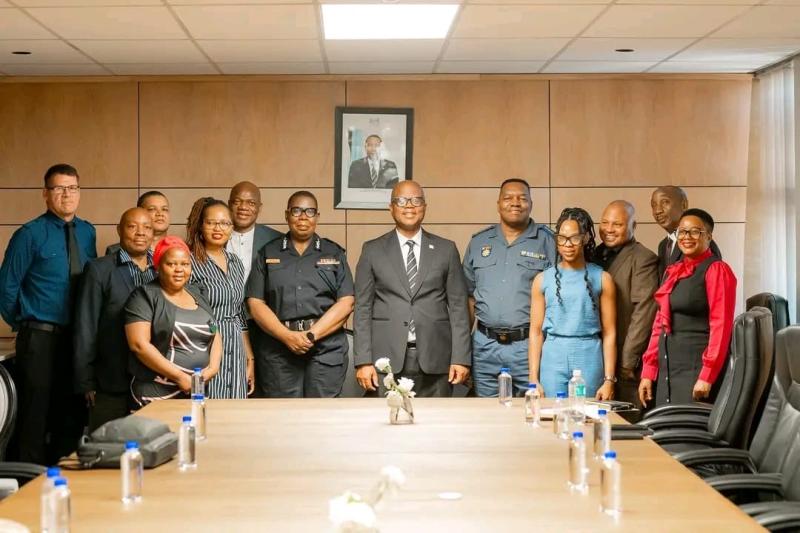
The South African Police Service (SAPS) and the Botswana Police Service (BPS) have committed to strengthening operational cooperation, intelligence sharing and joint interventions to combat cross-border crime.
The deepened collaboration will focus mainly on combatting stock theft, vehicle-related crimes and the use of technology by criminal syndicates.
The commitment follows a three-day bilateral engagement between SAPS National Commissioner, General Fannie Masemola and the Commissioner of the Botswana Police Service, Commissioner Dinah Marathe and senior officials in Gaborone, Botswana.
The engagement aimed to strengthen the existing policing relationship between the two countries and develop practical interventions to address criminal activities along identified problematic border areas.
Senior officials from both police services have been working on an action plan to ensure a coordinated and decisive response to lawlessness along the borders.
The plan focuses on strengthening intelligence sharing, improving investigative capacity, coordinating operations, and sharing resources and expertise.
Masemola emphasised that criminals must not be allowed to exploit jurisdictional boundaries or become more organised than the law enforcement agencies mandated to combat them.
“We cannot allow criminals to be more organised and better connected than the institutions responsible for fighting crime. If criminals are sharing information and coordinating their movements across our borders, then our response must be equally coordinated.
“Our responsibility is not only to arrest those who commit these crimes, but to dismantle the syndicates, disrupt their networks, recover stolen property and prevent these offences from recurring,” Masemola stated.
Botswana Police Service Commissioner, Dinah Marathe, added that it is all hands-on deck to deal decisively with lawlessness, especially along the borderline.
“Let us adopt a shared vision, one border, one intelligence quotient, one response. We should continue to share intelligence, operate together, and protect the community that connects us. Let criminals see one uniform.
“Let Dikgosi [traditional leadership], farmers, churches and ordinary citizens on both sides remain our eyes and ears. The Botswana Police Service under the guidance of our new Corporate Development Strategy V, will answer with shared intelligence, joint operations, and one fight against crime,” Marathe said.
Collaborating with communities
As part of the engagement, Masemola and Marathe met with traditional leaders (Dikgosi) and communities in the vicinity of the Ramatlabama border to listen to their concerns, particularly regarding stock theft and other criminal activities affecting border communities.
“Of particular concern to both police services is the increasing sophistication of stock theft syndicates, including the reported use of drones to scout farms, monitor livestock movements and identify opportunities to steal cattle, sheep and goats.
“The two police services have committed to strengthening their intelligence and investigative capabilities to identify individuals and syndicates abusing technology to facilitate criminal activities.
“This will include exploring lawful and effective measures to detect and disrupt the use of drones for criminal purposes, in line with the respective regulatory frameworks of both countries,” a joint statement from the two police services read.
The bilateral engagement further highlighted the need for closer cooperation between Stock Theft Units, Crime Intelligence, Detectives, Vehicle Crime Investigation Units and Border Policing structures.
Collaboration will also be strengthened in:
- Tracing stolen livestock and vehicles moved across the shared border
- Verifying vehicle documentation
- Investigating fraudulent transactions
- Dismantling the syndicates responsible for these crimes.
“To ensure that commitments made during the bilateral engagement translate into tangible operational outcomes, the Commissioners have agreed that relevant operational teams from both countries must meet regularly.
“These meetings will provide a platform to share intelligence, assess progress on ongoing investigations, review the implementation of the action plan, identify operational challenges and agree on further interventions.
“They will also ensure accountability through clear deliverables and measurable outcomes,” the statement read. – SAnews.gov.za


