


The United Nations Population Fund (UNFPA) Regional Director for East and Southern Africa, Lydia Zigomo, says the SADC region continues to lead globally in HIV response, with sustained reductions in new infections and AIDS-related deaths driven by a combination of prevention and treatment scale-up.
“We are at a decisive moment where gains will either be accelerated, sustained or reversed,” Zigomo said.
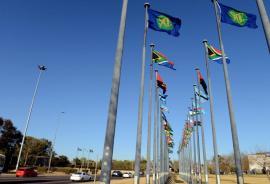
Speaking at the SADC Health Ministers Meeting currently underway in Sandton, near Johannesburg, Zi said the SADC region stands at a defining moment in 2026.
“While the SADC region has demonstrated exemplary leadership in positioning reproductive rights as the cornerstone of sustainable development, we find ourselves at a critical threshold where our hard-won progress remains fragile,” Zigomo said.
Zigomo said in 2025, the SADC region is aggressively operationalizing a new global strategy - a roadmap designed to accelerate its collective journey toward 2030.
“Our mission remains uncompromising. We are scaling our interventions to achieve the three Transformative results of Zero preventable maternal deaths, Zero unmet need for family planning and Zero gender based violence and harmful practices,” she said.
Zigomo said in the East and Southern Africa, the SADC region recognises that HIV prevention is not just a health goal, but it is a necessity.
“We cannot afford a reversal of gains, especially for our adolescent girls and young women who continue to carry the heaviest burden.
“In 2018, this region took a bold stand. Under the leadership of the Governments of South Africa, Eswatini, and Namibia, the SADC SRHR Strategy was adopted as a promise to every woman and girl in Southern Africa,” she said.
“Seven years later, the mid-term review confirms that this was not merely rhetoric. The region has moved from policy to decisive action,” Zigomo said.
According to Zigomo, over 163 laws, policies and strategies have been developed or strengthened across maternal health, HIV, family planning, adolescent SRHR, CSE and gender equality with the SADC region scorecard highlighting measurable progress.
“Maternal mortality has declined significantly in countries such as Malawi, Mozambique, Tanzania and Zimbabwe in some cases by up to 50%.
“The region continues to lead globally in HIV response, with sustained reductions in new infections and AIDS-related deaths driven by a combination of prevention and treatment scale-up,” Zigomo said.
South African Health Minister, Dr Aaron Motsoaledi, is chairing the meeting and is expected to give the closing remarks later today.
South Africa is hosting a joint meeting of the Ministers of Health and other Ministers responsible for HIV and AIDS within the SADC region to discuss a number of priority health issues, review progress made on regional health commitments and strengthen collaboration in addressing shared public health challenges.
The region continues to face a burden of disease characterised by the triple threat of high HIV/AIDS prevalence, tuberculosis (TB), and malaria. This is aggravated by rising non-communicable diseases (NCDs) and climate-related health risks of waterborne diseases such as cholera.
The SADC region accounts for at least one-third of all people living with HIV and AIDS globally, while eight member states are among the countries with the highest rates of TB.
On the other hand, about 75% of the population in the region remains at risk of contracting malaria, a deadly but preventable and treatable disease. – SAnews.gov.za


