


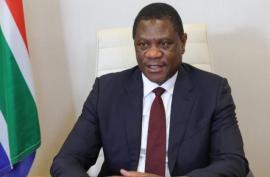
Deputy President Paul Mashatile has called on parliaments across the Southern African Development Community (SADC) to strengthen legislation, oversight and public participation in response to the worsening impacts of climate change.
“Climate change impacts such as persistent droughts, extreme weather events (including floods and cyclones), land degradation, and shifting rainfall patterns profoundly undermine sustainable development in SADC, particularly affecting women and youth.
“To effectively address climate change, it is imperative that we allocate sufficient resources to climate change mitigation and adaptation programmes, particularly those that focus on vulnerable groups,” he said.
The Deputy President delivered his remarks virtually to the 58th Plenary Assembly Session of the SADC Parliamentary Forum on Sunday. He told delegates that that although he would have liked to be with them, he was unable to attend owing to some other pressing Government commitments.
The session, held at the Durban ICC, is themed “The impact of climate change on women and youth in the SADC Region and the role of Parliaments in climate change mitigation and adaptation”.
Deputy President Mashatile said the focus underscores the necessity of collective action by parliaments to address and develop sustainable solutions for this pressing challenge.
“The success of these initiatives hinges on investment in robust monitoring and evaluation capacities, particularly in monitoring the impacts of climate-related programs. It is crucial to ensure these programmes are inclusive, effective, and aligned with their intended objectives, particularly in reducing vulnerabilities and promoting gender equity,” the Deputy President said.
G20 outcomes highlight Africa’s priorities
He noted that the plenary follows Africa’s historic hosting of the 2025 G20 Leaders’ Summit. He said the summit placed the interests of the continent and the Global South at the heart of global decision-making.
“A significant achievement was the adoption of the G20 Declaration centred on the themes of solidarity, equality, sustainability as key pillars of inclusive growth,” he said, adding that the declaration emphasised the African philosophy of Ubuntu.
The Deputy President outlined several commitments made by G20 leaders, including support for debt treatment reforms, improved representation of Sub-Saharan Africa at the IMF through the creation of a 25th Executive Board chair, global renewable energy targets, and expanded energy access through initiatives such as Mission 300.
He said leaders also expressed support for sustainable industrial policy, youth employment targets through the Nelson Mandela Bay initiative, resilient food systems under Ubuntu Approaches on Food Security and Nutrition, and the AI for Africa Initiative.
Deputy President Mashatile added that African representation on global platforms was strengthened.
“The leaders welcomed the African Union as a full member of the G20 and called for a transformative reform of the UN Security Council to make it more representative and inclusive,” he said.
Climate change hitting women and youth hardest
Deputy President Mashatile warned that the SADC region remains extremely vulnerable to climate shocks such as persistent drought, extreme weather and land degradation conditions that worsen existing inequalities.
“Climate change disproportionately affects women and young people, increasing their work burdens, escalating health risks, and heightening the dangers of gender-based violence and exploitation,” he said.
He stressed that women, as primary providers of food, water and fuel, face extended journeys, thereby increasing their workload, exposure to risks and adverse health consequences.
“This situation exacerbates the vulnerability of girls, leading to a significant rise in school dropouts among adolescent girls. This phenomenon often contributes to unequal gender roles, increasing their risk of child, early, and forced marriages as a coping mechanism for impoverished families. Furthermore, it exposes them to physical and sexual abuse,” he said.
Parliaments must lead mitigation and adaptation
The Deputy President outlined a strong mandate for SADC parliaments, saying they must legislate, oversee implementation and amplify community voices in climate governance.
“Immediately, we must enact and strengthen our policies to align with regional agreements such as the SADC Protocol on Gender and Development [and] international climate agreements such as the Paris Agreement,” he said.
He urged MPs to promote gender-sensitive legislation, enable renewable energy expansion, and support sustainable critical mineral value chains.
“As we implement these transformative reforms, we must strengthen oversight and accountability. This work will entail Parliaments holding governments accountable for their performance in implementing domestic climate laws, regional commitments, and international obligations,” he said.
The Deputy President referenced South Africa’s recent progress, the Climate Change Bill which was signed into law by President Cyril Ramaphosa in 2024, outlining a national climate change response.
He said the law aims to build resilience while supporting jobs and new opportunities in the green economy. Parliament has also recommitted to clean governance and anti-corruption measures as part of strengthening climate action frameworks.
‘Together, we can make a difference'
The Deputy President called for unity and decisive leadership across the region.
“It is imperative that we work together to ensure that our laws and policies reflect the urgent need to address our challenges, including climate change and its disproportionate impact on women and youth.
“As leaders in our communities, let us commit ourselves to meaningful and impactful action…Together, we can make a difference and ensure that our region thrives in the face of environmental challenges,” he said. – SAnews.gov.za


