


As logistics and mobility reform remain one of the key pillars of government’s agenda for sustainable economic growth, South Africa plans to move up to 24 million tons of freight annually from 1 April next year.
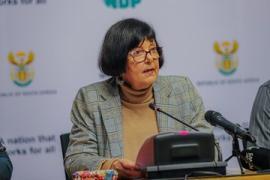
“This will ensure more South African minerals, vehicles and agricultural produce reach international markets, securing jobs and earning much-needed revenue for our fiscus,” Minister of Transport Barbara Creecy said on Tuesday in Parliament.
Delivering the Budget Vote for the Department of Transport, Creecy announced that the Transnet Rail Infrastructure Manager (TRIM) will soon reveal the names of the first 11 private Train Operating Companies expected to help increase South Africa’s export volumes.
“An effective and efficient transport, mobility, and logistics system will unlock opportunity, restore competitiveness, reduce inequality and enable inclusive growth,” she said.
The Minister warned that South Africa faces growing competition from neighbouring countries investing in new rail and port infrastructure.
“Consequently, logistics and mobility reform must be at the heart of our programme for long-term, sustainable economic growth. Improved rail and port infrastructure is already increasing throughput on key export corridors, ensuring improved network reliability, and achieving gains in job creation and emissions reduction,” the Minister said.
She tabled a R102 billion budget for the 2026/27 financial year aimed at building a transformed, inclusive and competitive transport system that serves commuters, freight operators and export industries.
“Significant strides have been made in unlocking investment and accelerating infrastructure delivery. The Durban Container Terminal Pier 2 Concession has reached financial close and will increase port handling capacity from 2.0 million to 2.8 million Twenty-Foot Equivalent Units (TEUs) a year,” the Minister said.
Creecy hailed the development as a bankable model for future public-private sector partnerships.
She said several Private Sector Participation projects are expected to move to market this year, including the Ngqura Manganese Export Corridor, Richards Bay Dry Bulk Terminal, and the Container Corridor between Gauteng and eThekwini.
“Through the Budget Facility for Infrastructure, R16.8 billion in public investment has already been approved and is in execution across the coal and iron ore lines and port infrastructure. Applications for a further R23.6 billion are being developed,” Creecy said.
Aviation sector
According to the Minister, the aviation sector continues to recover strongly and is contributing towards the target of 42 million passengers and 1.2 million tons of air freight moving through the Airports Company South Africa (ACSA) network by 2029.
“ACSA recorded 37.498 million passenger arrivals and departures in the year to date, representing a significant increase from 34.508 million recorded in the previous year.
“In relation to air cargo, strategic infrastructure investment is on track to commence in March 2027. This development is complemented by a focused sector strategy targeting high-value cargo segments, including pharmaceuticals, e-commerce, aerospace and defence, perishables, diamonds and metals, and automotive components,” Creecy said.
Taxi industry
Creecy said the taxi industry remains a vital part of South Africa’s transport system and one of the country’s largest black-owned sectors.
“In this new financial year, we are formally establishing the Transport Economic Regulator so that port and rail fees can be independently determined, ensuring a level playing field for all operators,” she said.
The government will also conclude the review of the Taxi Recapitalisation Grant this year.
The programme aims to promote the use of safe and compliant vehicles while providing a capital subsidy to encourage compliance within the industry.
“Work is being done between the Department, taxi associations and financial institutions to reduce the risks associated with the cost of new vehicles and provide affordable finance to taxi operators,” Creecy said.
She added that formalising the taxi industry is essential to unlocking further economic value.
The South African National Taxi Council has already piloted a cashless taxi route in Gauteng, marking an important step towards modernising and de-risking the sector.
“The taxi industry remains a key part of the national transport landscape and one of the largest black-owned sectors in the country, with annual revenue estimated at between R60 billion and R100 billion, contributing about 1.4% to Gross Domestic Product (GDP),” the Minister said. -SAnews.gov.za


