


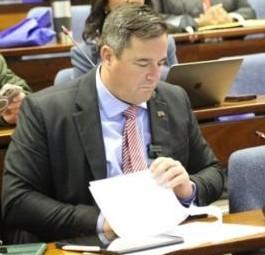
Minister of Agriculture, John Steenhuisen, has reaffirmed South Africa’s commitment to food sovereignty as a pillar of national resilience and development.
Steenhuisen made the commitment at the second United Nations Food Systems Summit +4 Stocktake (UNFSS+4), held at the United Nations Economic Commission for Africa (UNECA) headquarters in Addis Ababa, Ethiopia.
The three-day conference, which began on Sunday, brought together Heads of State, Ministers, scientists, producers, indigenous leaders, youth and civil society to assess progress on transforming food systems worldwide.
In his address, the Minister outlined a series of strategic initiatives designed to strengthen local food production and empower communities to define their own food policies.
He said the South African government is promoting localised food production, with a clear focus on leveraging indigenous crops and livestock, which have both nutritional value and resilience to climate change.
“Current government programmes are mapping these crops nationwide and investing in research to identify underutilised plants and their agro-processing potential to develop products that will facilitate the upscaling and uptake of these foods for nutrition security,” the Minister said.
To further bolster self-sufficiency, Steenhuisen announced the development of community seed banks, ensuring reliable access to quality seeds, and supporting agricultural self-sufficiency.
“Breeding for resilience is the buzzword in promoting livestock, with a focus on indigenous livestock for genetic material. Strengthening biosecurity with the development of modern diagnostic tools that will aid tracking and tracing outbreaks, and research and development of vaccines to support prevention programmes, are prioritised,” he said.
The Minister underscored government’s continued support for smallholder farmers, noting the Comprehensive Agricultural Support Programme (CASP), which provides financial assistance, training, and infrastructure to enhance productivity and sustainability.
With global food inflation on the rise, Steenhuisen highlighted initiatives like Ilima/Letsema’s (One Household, One Garden) model designed to help households mitigate rising food costs, especially for vulnerable populations.
He highlighted that South Africa is also advancing sustainable and regenerative production systems.
“We are actively encouraging our farmers to embrace regenerative agriculture, agroecology and conservation practices. These approaches are designed to restore land, improve biodiversity, and future-proof local food systems in the face of climate volatility,” the Minister said.
“Food safety and quality assurance are non-negotiable priorities. The South African Good Agricultural Practices (SA GAP) programme is helping farmers – especially smallholders – adopt responsible, market-friendly production methods that meet both domestic and international standards.”
Reflecting on international collaboration, the Minister noted South Africa’s engagement with global partners, such as the G20 Food Security Task Force and the Food and Agriculture Organisation (FAO) to address food price inflation and its impact on low-income households.
“The aim is to develop policy “baskets” that support effective interventions, both at home and across the African continent. Key elements include smallholder farmer support, sustainable agriculture aligned with the Comprehensive Africa Agriculture Development Programme, and country-led planning—all in support of the African Agenda 2063,” the Minister said. – SAnews.gov.za


