


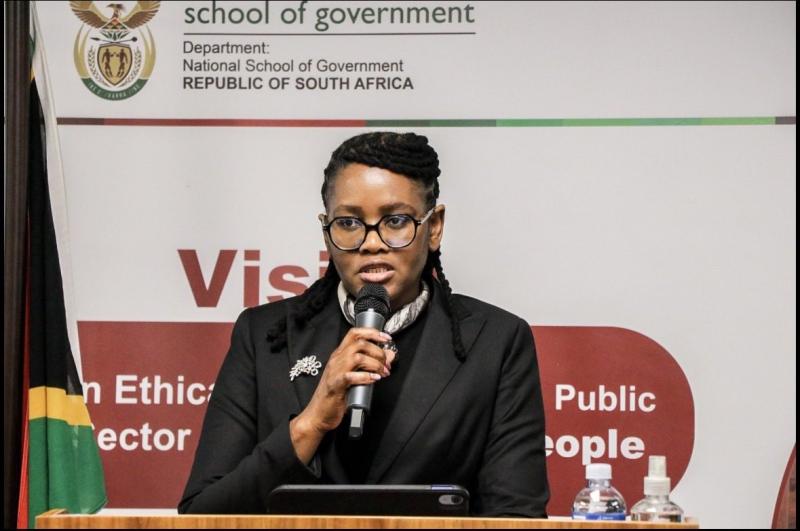
The National School of Government (NSG) and the Russian Presidential Academy of National Economy and Public Administration (RANEPA) have launched a four-day course for public servants on Water Resources Management and Water Quality Management in Pretoria.
The programme is designed to address the challenges in state capacity related to water management that President Cyril Ramaphosa mentioned in February of this year.
The course is being implemented as part of the cooperation agreement signed by the NSG and RANEPA in November 2025.
The agreement provides for collaboration in scientific and educational development, including short-term training programmes for public servants, the exchange of scientific materials and publications, faculty visits, joint conferences and research projects.
The programme brings together experts from RANEPA and leading Russian scientific institutions, including specialists with experience in monitoring water resources, managing pollution, hydrological science, geoinformation technologies and mathematical modelling.
It also creates an opportunity for South African practitioners to share their experiences and challenges.
Speaking at the launch of the NSG–RANEPA Water and Environmental Security Programme, Acting Principal of the National School of Government, Phindile Mkwanazi, said the programme represents an important step in translating international cooperation and technical knowledge into practical public-sector capability.
Mkwanazi said the NSG welcomes the opportunity to expose South African public servants to international expertise while ensuring that such knowledge is adapted to the country’s own developmental and institutional context.
“International cooperation is most valuable when it strengthens our ability to address our own challenges. The NSG’s role is to ensure that the knowledge shared through this programme is translated into practical learning that officials can apply in their respective institutions and spheres of government,” she said.
According to Mkwanazi, the NSG is particularly focused on ensuring that the programme's benefits extend beyond the participating officials.
“We want this engagement to contribute to sustained institutional learning. The knowledge gained must ultimately support better planning, better-informed decisions and improved service delivery, particularly for communities that depend on reliable and safe water services,” she said.
Mkwanazi said the NSG would continue to work with its partners to strengthen the capabilities of public servants across the three spheres of government, with a particular focus on officials involved in water services and related areas of public administration.
Also speaking at the launch, the CEO of the Municipal Infrastructure Support Agency (MISA), Mapatani Kgomo, said sustainable water services depended on capable municipalities, strong governance and project lifecycle funding.
Kgomo said the contribution of MISA was to assist municipalities in moving from recurring crisis response to long-term infrastructure reliability. – SAnews.gov.za


