


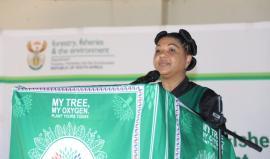
By Bernice Swarts
South Africa continues to face a host of interconnected socioeconomic and environmental challenges. These include the triple challenges of inequality, poverty, and unemployment, which are further compounded by climate change, biodiversity loss, and pollution.
These threats are not theoretical — they are realities already affecting our families and communities, especially the most vulnerable. Yet, within these challenges lie opportunities, and our department is taking bold steps to transform policy into real, life-changing action.
National Dialogue
Over the past 30 years, we have made great strides as a nation - expanding freedom, deepening democracy and building a better life for millions. Yet we also face persistent challenges: inequality, unemployment, social divisions and a growing disconnect between citizens and institution. In this spirit, President Cyril Ramaphosa has called for an inclusive National Dialogue – a people-led, society-wide process to reflect, reset and reimagine South Africa's future. The National Dialogue is a chance for all South Africans, from all walks of life, to come together and help shape the next chapter of our democracy.
At this point I wish to also express my support for the planned National Dialogue as a forum to unite South Africans behind a shared vision and approach towards addressing structural challenges as a result of the apartheid legacy.
For the Department of Forestry, Fisheries and the Environment, the National Dialogue presents an opportunity to engage meaningfully with all South Africans — particularly youth, women, and persons with disabilities — about the socioeconomic opportunities available within our sector.
We believe the outcomes of this important national engagement must translate into practical solutions that enable our people to contribute and benefit meaningfully from the work we do as both a department and a government.
One Million Trees in One Day
Under the Presidential Flagship “Ten Million Trees Programme,” our department has set out to do something remarkable - plant 1 million trees in one day under the rallying call, “My Tree, My Oxygen. Plant Yours Today,” we invite every South African — from schoolchildren to corporates — to participate.
This isn’t just a symbolic act. It’s a movement for environmental justice and climate resilience. Trees are nature’s air purifiers, carbon sinks, and shelters for biodiversity. We are in the final year of this programme, and with renewed vigour, we're mobilising every corner of society to ensure we meet and exceed our target.
Small-Scale Fisheries - Voices from the Coastline
Our oceans offer abundant resources, but for too long, small-scale fishers have been left behind. That’s why we convened the Small-Scale Fishing Co-operatives Summit in Mthatha in May. We heard firsthand about the struggles fishers face: poor infrastructure, limited market access, and lack of support.
The summit wasn’t just a talk-shop. It was a collective turning point. We are now developing technical support packages, mentorship programmes, and policy enhancements to bring dignity and sustainability to the sector. When fishing co-ops thrive, entire coastal communities thrive.
Tackling E-Waste: A Crisis Turned Opportunity
Did you know that South Africa generates over 360,000 tons of electronic waste each year? Shockingly, only about 10% of that is properly recycled. The rest — from broken TVs to outdated cellphones — ends up in our landfills or is dumped illegally, contaminating soil and water and endangering our ecosystems.
To combat this, the Department of Forestry, Fisheries and the Environment (DFFE) has rolled out a groundbreaking e-Waste Recycling Pilot Project. Launched in Limpopo, Mpumalanga and North West, the project has already collected over 30 tons of e-waste from rural municipalities. This isn’t just about waste removal — it’s about building a circular economy, holding producers accountable through Extended Producer Responsibility regulations, and creating green jobs.
Importantly, this initiative comes as South Africa assumes the G20 Presidency, where we have identified the circular economy and waste management as priorities.
Supporting Communities Through Forestry
Transformation in the Commercial Forestry Sector is no longer aspirational — it is underway. The DFFE is transferring eight state-owned plantations to local communities through Community Forestry Agreements. Alongside this, we’re providing post-settlement support, including business development, training, and job creation.
This initiative alone is expected to generate over 7,000 work opportunities and 550 full-time jobs, especially in impoverished rural areas. It’s forestry with a human face — empowering people to become stewards of their own natural resources.
Restoring Biodiversity, One Landscape at a Time
Through the GEF7-funded Sustainable Land Management Project, we are actively reversing land degradation in Limpopo and the Northern Cape. We have trained 129 community champions, employed over 170 people, and cleared invasive species from vast grazing lands.
Furthermore, our commitment to combating Desertification, Land Degradation and Drought (DLDD) is echoed on the global stage as a priority under our G20 Presidency.
Infrastructure for Nature and People
Our work isn’t only environmental — it’s infrastructural too. The Lowveld National Botanical Garden in Nelspruit, recently restored after flood damage, now boasts a new raised bridge and viewing deck. These are not mere cosmetic upgrades; they are symbols of resilience and investments in nature-based tourism that support SMMEs and jobs.
Last year alone, the South African National Biodiversity Institute (SANBI) implemented over 50 infrastructure projects, while its Kids in Gardens programme reached more than 153,000 young people with environmental education. We are seeding not only trees, but a new generation of conservationists.
Building a Just, Green Future
Our collective mission is clear: we must transition to an environmentally sustainable, economically inclusive society. And that requires partnerships — across sectors, provinces, and people.
As we deliver on our budget priorities, let us rally behind bold, practical and transformative action — from planting a tree to recycling e-waste to supporting a community forestry project. These aren’t just departmental initiatives. They are building blocks of a just transition that leaves no one behind.
Together, let us restore our land, empower our people, and green our future.
*Bernice Swarts is the Deputy Minister of Forestry, Fisheries and the Environment


