


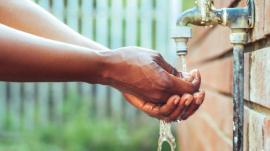
The City of Tshwane, in partnership with the Department of Water and Sanitation (DWS) and Magalies Water, continues to make significant progress in restoring safe and reliable potable water to the Hammanskraal, north of Pretoria.
This work forms part of the broader Hammanskraal Intervention Project, which is being implemented in phases to improve water quality in a sustainable and regulated manner.
The project consists of four implementation phases, with each phase focused on extending potable water supply to designated households.
Progress on Phase 2
According to a joint statement, Phase 2 (Module 2), commissioned on 29 July 2025, supplies water to Kudube Units 1, 2, 3, 6, 10 and D, Majaneng Moshate, Jubilee Hospital, and the Dominican School for the Deaf.
“The confirmation of the water quality and safety for human consumption regrettable took longer than initially envisaged for the areas earmarked for this phase of potable supply. This is due to technical and infrastructure challenges experienced during the implementation of this phase of the project,” the statement reads.
Among the challenges included:
• Operating in a Brownfield environment with the integration into an existing ageing network, requiring a controlled ramp-up of flow rates and pressures while also addressing multiple leak repairs.
• Higher-than-anticipated demand, as confirmed by an assessment by the City of Tshwane in September 2025, indicating actual water demand to be approximately 21 megalitres per day (ML/day), nearly double the original design estimate of 11 ML/day, while the current design capacity to supply Phase 2 is 12.5 ML/day.
Mitigation interventions
To ensure consistent supply while final infrastructure work continues, the City of Tshwane, DWS, and Magalies Water have implemented several joint interventions, including:
• Redirecting additional capacity from Module 1 to supplement Phase 2,
• Redirecting approximately 5 ML/day from Module 3 through the existing network to supply Phase 2 area, and
• Temporarily excluding Jubilee Hospital and the Dominican School for the Deaf from the current water quality declaration process.
The Jubilee Hospital and the Dominican School for the Deaf facilities have been separated from the rest of the Phase 2 reticulation network through isolation valves to allow focused technical remediation of their internal water systems and alternative water sources in their premises.
“Once internal water safety measures are verified and confirmed, a separate declaration for these sites will be issued. As a result of these actions, water quality and reliability in the designated Phase 2 areas have significantly improved,” the statement reads.
Water quality compliance results
Water testing has been conducted in accordance with SANS 241:2015, South Africa’s national standard for drinking water.
Based on recent results, and notwithstanding earlier delays, water supplied to Kudube Units 1, 2, 3, 6, 10 and D, and Majaneng Moshate (east of Makapanstad Road) has been certified safe for human consumption.
The stakeholders added that work continues to complete the water supply to Phase 3 and Phase 4 of the Hammanskraal Intervention Project.
Progress updates will be issued as each area achieves full compliance with national water quality standards.
“This progress reflects a strong partnership between the City of Tshwane, DWS, and Magalies Water, working to ensure long-term, safe, and equitable access to drinking water for the Hammanskraal community.”
The initiative aligns with the objectives of the National Development Plan (NDP) 2030 and the United Nations Sustainable Development Goal 6, which calls for universal access to clean water and sanitation. – SAnews.gov.za


