


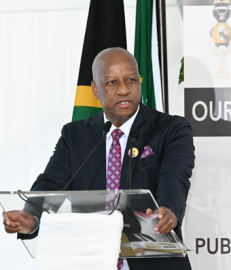
KwaZulu-Natal Premier Thamsanqa Ntuli has reaffirmed the provincial government’s commitment to strengthening healthcare and education, describing the two sectors as foundational to economic growth and social development.
Delivering the State of the Province Address (SOPA) in Pietermaritzburg on Friday, Ntuli said improving education and healthcare remains one of the administration’s eight strategic priorities.
“No economy can grow, and no society can thrive, without a healthy and educated population,” he said.
Despite fiscal constraints, the KwaZulu-Natal Department of Health has continued to prioritise service delivery, guided by the Batho Pele principles. The province’s approach has focused on improving health literacy, disease prevention, access to services, treatment adherence and strengthening long-term health system resilience.
In January 2026, the department reached a milestone by formally employing more than 4000 community health workers on a full-time basis for the first time. The move restores job security and stability for frontline workers while reinforcing community-based healthcare services.
The Premier also highlighted the success of the Ikhemisi Eduze Nawe (A Chemist Closer to Your Home) Programme, through which more than 1.1 million active patients now collect chronic medication closer to where they live. The initiative has reduced transport costs, eased congestion at healthcare facilities and improved continuity of care.
Ntuli committed to expanding medication pick-up points and strengthening partnerships to reach more communities.
Shift to prevention and improved HIV outcomes
The provincial government has intensified its Healthy Lifestyle Programme, promoting physical activity, improved nutrition and reduced tobacco, alcohol, and substance use.
Through community outreach initiatives such as Isibhedlela Kubantu (Hospital to the People), wellness activations and school engagements, the province is strengthening prevention efforts against communicable diseases, including HIV, tuberculosis, and sexually transmitted infections, as well as non-communicable diseases like hypertension, obesity, heart disease, and diabetes.
Ntuli described the approach as a deliberate shift from a curative to a preventive healthcare model.
The province has also recorded sustained improvements in HIV prevention and treatment, with more than 1.57 million people across the province currently on antiretroviral treatment.
Through the #CloseTheGap campaign, over 210 000 patients who had defaulted were traced and returned to care.
“As a result, KwaZulu-Natal is no longer the leading contributor to new HIV infections nationally,” Ntuli said, describing the development as a significant milestone in epidemic control.
Infrastructure upgrades and emergency services
Infrastructure renewal remains central to improving patient experience and service delivery.
The Premier highlighted that over the past two financial years, several clinics have been renovated and upgraded, including the Cwaka Replacement Clinic, Newtown Clinic and Sokhela Clinic, strengthening the province’s primary healthcare platform.
Maintenance initiatives, including generator installations, boreholes, improved lighting, perimeter fencing, sewer upgrades and roof replacements, have enhanced safety and reliability at facilities.
Construction is continuing at the Mpaphala Medium Clinic, Nyavini Clinic and Mpolweni Small Clinic, while designs for the uMtubatuba Community Health Centre and the Vryheid Mortuary are being finalised.
Ntuli said the province remains committed to modernising facilities and expanding capacity in high-demand areas despite budget pressures.
Emergency Medical Services have been reinforced with the addition of 44 new ambulances, and plans to procure more than 60 additional ambulances in 2026.
During the past financial year, more than 240 nurses and over 238 doctors were appointed, with recruitment focused on critical clinical posts to stabilise facilities and reduce workload pressures.
Through Operation Sukuma Sakhe and the District Development Model, the province continues to strengthen household-level outreach, linking vulnerable families to healthcare and social services. Efforts to improve queue management, staff accountability and patient engagement are also being intensified, alongside stronger monitoring of service standards and complaints resolution.
Investment in education
Turning to education, Ntuli said the KwaZulu-Natal Fiscal Framework remains anchored on the provincial equitable share, with allocations over the medium-term expenditure framework to progressively equalise remuneration for Grade R teachers, following the incorporation of Grade R into compulsory basic education.
He announced that the education sector will receive R70.068 million in 2026/27 from the Presidential Employment Stimulus for the Teacher Assistants Programme. Under conditional grants from the same programme, allocations amount to R270.510 million, R915.263 million and R932.934 million over the medium term.
Early Childhood Development has been allocated R133.3 million, while the Education Infrastructure Grant amounts to R55.8 million.
Ntuli said these investments aim to strengthen foundational learning, expand employment opportunities, and ensure that both healthcare and education systems are equipped to support inclusive growth across the province. – SAnews.gov.za


