


Africa must strengthen its research infrastructure – particularly public research capabilities – if it is to meaningfully address inequality.
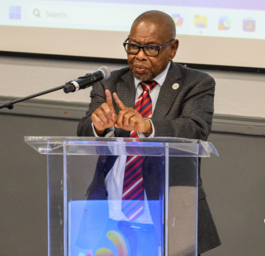
Minister of Science, Technology and Innovation, Professor Blade Nzimande, on Wednesday, said research is a critical component of all the efforts undertaken to address the persistent impact of colonialism, which has resulted in structural inequality, poverty and unemployment.
This, coupled with new challenges such as climate change, continues to hinder Africa’s ability to attain higher levels of development and engage with the rest of the world on equal terms.
“One of the contributing factors is the state or quality of our research infrastructure on the African continent,” Nzimande said at the Engaged Research Conference, which was held in Ekurhuleni, Gauteng.
The conference was attended by senior government officials, heads of public research institutions and academic institutions, business and young researchers and scientists, among others.
Nzimande said public institutions should facilitate knowledge transfer, encourage collaboration between researchers and the community, and directly address pressing societal issues.
He believes that science and technology should not just be for the elite, but they must aim to uplift communities and bridge the gaps of inequality.
He called for the Engaged Research Conference to expand Africa’s research infrastructure over the next decade, not just for the continent’s progress but for it to contribute meaningfully on the global stage.
Nzimande said the intersection of knowledge and society can only be achieved when leaders invest in robust public research capabilities that serve all.
The Minister believes that establishing wider, smarter, and more efficient connections among pan-African research infrastructure will enhance collaboration among Africa’s scientists and researchers.
“It is, therefore, vital that we make these connections and networks function on a pan-African scale.”
Nzimande said strengthened research capabilities are vital for the successful implementation of the many visions Africa has collectively expressed through initiatives such as the African Continental Free Trade Area and the African Union’s Science, Technology and Innovation Strategy for Africa, which are part of achieving the objectives of Agenda 2063.
Advancing innovation for social justice
The conference is part of the Engaged Research Project, organised and convened by the Human Sciences Research Council.
The Engaged Research Project -- an initiative of the Department of Science, Technology, and Innovation, in collaboration with the National Research Foundation -- seeks to advance engaged research within South Africa’s National System of Innovation.
In his address, Nzimande highlighted the dire state of inequality and social challenges that Africa faces, particularly in light of the United Nations’ 2025 World Social Report.
“Despite significant gains in poverty reduction, many people teeter on the brink of poverty.
“Over 2.8 billion people – more than a third of the global population – live on US$2.15 to US$6.85 a day,” he said, highlighting that socio-economic challenges are sometimes compounded by the region’s research capabilities.
The Minister said the Global South plays a crucial role in the world economy and innovation landscape.
“The Global South accounts for 85% of the world’s population, around 40% of the global economy, and 46% of global goods exports.”
Nzimande encouraged increased investment in research and development to bolster Africa’s innovation capabilities.
“Many emerging economies have increased their investment in research and development, resulting in continuous enhancement of innovation capabilities.”
As Africa looks to the future, delegates agreed that prioritising public research institutions will be essential for sustainable development. – SAnews.gov.za


