


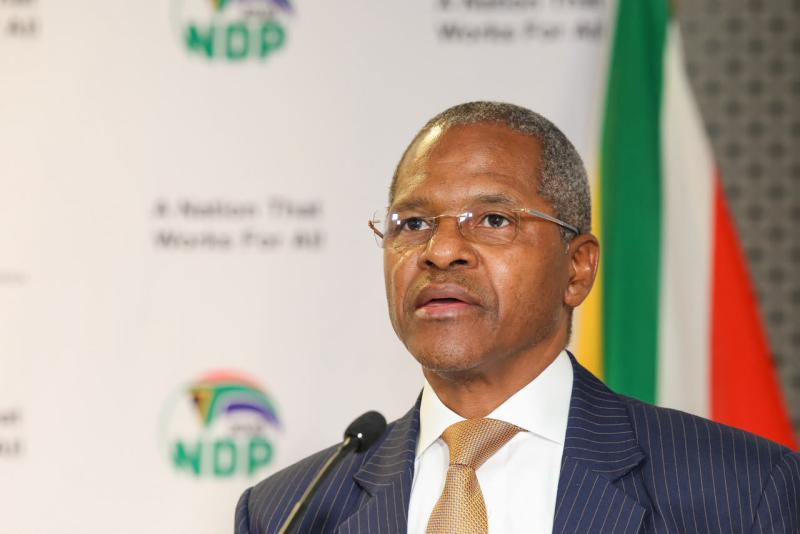
Cooperative Governance and Traditional Affairs (CoGTA) Minister Velenkosini Hlabisa has issued guidelines to help municipalities manage coalition governance, strengthen institutional stability, and ensure that political transitions do not disrupt service delivery to communities.
The Guidelines for Stable Coalitions in Local Government follow the Local Government Elections, held on 4 November, which confirmed coalition governance as a significant feature of South Africa's local government landscape.
Approximately 138 metropolitan and local municipalities, representing about 65% of councils, did not produce an outright majority for a single political party. These municipalities will therefore require coalition arrangements, minority governments, or other forms of cooperative governance.
Hlabisa said the increasing prevalence of coalition governance requires municipalities and provincial governments to be adequately equipped to manage these arrangements in a manner that promotes stability, accountability and effective service delivery.
"Coalition governance is a legitimate feature of our democratic system. However, our experience has shown that prolonged political instability, frequent changes in municipal leadership and delays in decision-making can weaken municipal institutions, disrupt administration, and ultimately compromise service delivery.
“The people who suffer most from such instability are the residents who depend on municipalities for essential services. These Guidelines are intended to assist municipalities and political parties to navigate coalition arrangements responsibly, while keeping the interests of communities and the effective functioning of municipalities at the centre of governance," Hlabisa said.
The guidelines provide practical guidance on political collaboration, the development of coalition agreements, applicable legislative requirements, dispute resolution, and measures to safeguard continuity in municipal administration.
They encourage coalition partners to enter into written agreements that clearly outline their shared policy priorities, the allocation of political responsibilities, decision-making processes, standards of conduct and mechanisms for resolving disputes, among others.
A template coalition agreement has also been included to assist political parties in developing arrangements suited to their respective municipal circumstances.
The guidelines further emphasise the need to maintain a clear distinction between political governance and professional municipal administration. Coalition agreements must not interfere with decisions that legislation assigns to municipal councils, authorised office-bearers, or the administration.
This means that matters relating to administrative appointments, procurement and tender awards must remain the responsibility of legally authorised decision makers.
To strengthen institutional preparedness, the guidelines encourage municipalities to put in place clear council rules of order, terms of reference and systems of delegation.
These measures are intended to ensure that municipal administrations continue implementing approved policies, Integrated Development Plans (IDPs), budgets, and service delivery programmes, even during periods of political uncertainty.
Hlabisa also highlighted the statutory timeframes governing the constitution of municipal councils following the elections.
In terms of the current legislative framework, the first meeting of metropolitan and local municipal councils must be convened within 14 days after publication of the Government Gazette notice naming the elected councillors.
Local municipalities must also appoint their representatives to district councils within the applicable statutory period, followed by the convening of the first district council meeting within 14 days.
The Minister stressed that coalition negotiations do not suspend or extend these legislative timeframes.
He has called on Members of Executive Councils (MECs) responsible for local government and provincial departments to distribute the guidelines to all municipalities, support their implementation and monitor compliance with statutory requirements.
Provincial authorities are also expected to provide early intervention and assistance where political instability or delays threaten the effective functioning of municipalities.
The Department developed the guidelines using lessons from coalition governance across municipalities, previous research and work undertaken by leading local government scholars and institutions, as well as contributions from provincial governments, the South African Local Government Association (SALGA), and other stakeholders.
Hlabisa called on political parties to ensure that coalition arrangements are underpinned by cooperation, accountability, and a shared commitment to serving communities.
"Political parties have a responsibility to ensure that their governing arrangements are guided by cooperation, accountability and a shared commitment to serving communities. Differences among coalition partners must not become obstacles to the work of municipalities.
"Ultimately, the success of any governing arrangement must be measured by its ability to support effective municipal administration, strengthen governance and improve the delivery of services to residents," the Minister said.
The guidelines are available to municipalities, provincial governments, political parties, and other stakeholders to support the establishment and management of stable coalition arrangements in local government.
The full guidelines can be accessed at https://www.cogta.gov.za/cgta_2016/wp-content/uploads/2026/11/Guidelines-for-Stable-Coalitions-November-2026.pdf - SAnews.gov.za


