


The Department of Women, Youth and Persons with Disabilities has called for South African Sign Language to be integrated into the public service to ensure Deaf and hard-of-hearing persons can access information and government services.
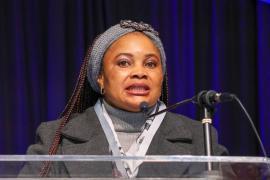
“Planning for accessible communication should be normalised in government planning, budgeting, procurement, monitoring and accountability systems. When Deaf and hard-of-hearing persons cannot access basic information that enables independent living, we directly violate their human rights and make it impossible for them to exercise those rights," Chief Director for Advocacy and Mainstreaming, Rights of Persons with Disabilities, Phuthi Mabelebele, said on Tuesday.
Speaking at the virtual launch of Deaf Awareness Month, Mabelebele said public service information should be available in accessible formats.
“Emergency and disaster communications should be accessible. Healthcare facilities should have mechanisms that facilitate effective communication.
“Courts, police stations and justice services should provide appropriate communication support. Public meetings and consultations should include communication accessibility from the planning stage, rather than reacting only when we realise that participants require captioning or South African Sign Language interpretation.
“We cannot claim that a participation process is inclusive when Deaf people cannot understand or contribute to it, because they are excluded from the communication,” she said.
Mabelebele said the White Paper on the Rights of Persons with Disabilities should include indicators that ensure minimum service delivery standards for Deaf and hard-of-hearing persons.
The White Paper serves as South Africa's national policy framework for mainstreaming disability equity, protecting human rights and eliminating systemic exclusion.
“We cannot claim that a service is inclusive when some people are left behind. They are also excluded from decisions about inclusive resource allocation and from ensuring that their specific needs are considered.
“As a result, services provided to persons with disabilities will fall short. We cannot claim that justice is accessible when communication barriers prevent Deaf and hard-of-hearing persons from reporting a crime, giving evidence, or understanding legal proceedings,” she said.
Mabelebele said accessibility must be built into the design of government services from the outset.
“Central to advancing accessibility is the availability of disaggregated data. Disaggregated data provides an evidence base for designing services, enabling participation, promoting stability and strengthening security.
“As a society, we should build the confidence of persons with disabilities to disclose their disabilities, including deafness, without fear of stigmatisation, discrimination, negative attitudes or harmful perceptions.
“If Deaf and hard-of-hearing persons are unable to disclose their disabilities, and disclosure is not normalised, accessible services and information will remain out of reach because we will not be able to provide what their communities need,” Mabelebele said.
She said work on the rights of persons with disabilities recognises disability through a human rights-based model, rather than a welfare, social or medical model.
“The medical model is important for identifying and addressing diverse disabilities. The social model is important for identifying gaps and ensuring that persons with disabilities receive equitable and equal support.
“However, the human rights model is all-encompassing and must remain at the core of every effort to dismantle barriers in society, institutions, systems and communication,” the Chief Director said.
Mabelebele emphasised that mainstreaming is not the responsibility of government alone.
“For effective mainstreaming, we must all ask ourselves an important question. How must our systems change so that Deaf and hard-of-hearing persons can participate equally?
“Mainstreaming is not the responsibility of government alone; it is the responsibility of all of us. It happens in institutions, communities and every social space in which we find ourselves,” she said.
Mabelebele added that television and digital media should expand captioning and sign-language access, while government websites and digital platforms should also be made accessible.
“Public servants should receive training on Deaf awareness and communication. Assistive communication technologies should be promoted and made more accessible. We also have a responsibility to promote innovation and to ensure that planning supports easy access to communication for persons with disabilities,” she said. -SAnews.gov.za


