


As South Africa strengthens its response to citizens’ growing concerns over illegal immigration, government has set out a clear approach that demonstrates its unambiguous ability to secure its borders, and create an environment conducive to advancing the economy and building a country that works for all.
The Comprehensive Approach for Migration Management, presented by President Cyril Ramaphosa in his nationwide address on Sunday, 7 June, revealed government’s ability to handle illegal immigration where it takes place.
The Department of Home Affairs has already proven its capacity to handle deportation, with Minister Leon Schreiber having reported in April that Home Affairs had carried out 109 344 deportations over the past two financial years.
Schreiber attributes a significant portion of the increase in deportations to the use of drone and body camera technology to surveil ports of entry.
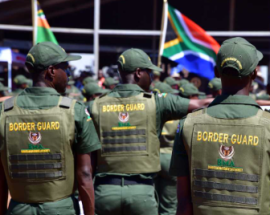
In 2025, the Border Management Authority (BMA) introduced advanced night-vision drones equipped with thermal imaging and artificial intelligence. These drones can detect people and vehicles in remote areas, including at night, helping border guards identify and intercept illegal crossings more effectively.
In the first quarter of the 2025/26 financial year, the BMA reported intercepting and deporting 9 954 people attempting to enter South Africa illegally. Of these, 5 826 were undocumented, 2 127 were inadmissible and 2 001 were classified as undesirable.
Home Affairs and the BMA have expanded the use of biometric systems, including fingerprint verification, to identify undocumented migrants and detect fraudulent documents. This is intended to make it harder for people to evade immigration controls.
The blend of new technology and traditional surveillance, coupled with a commitment to rooting out fraud and corruption in the immigration space, will go a long way in supporting heightened surveillance at ports of entry. This as the President on Sunday announced that government will undertake a phased relocation of refugee reception centres to border posts, starting with the Tshwane centre this year.
The relocation of refugee reception centres close to where refugees enter the country, he said, was a strategy that has been employed by many other countries.
Additionally, South Africa will set up dedicated courts to deal with immigration and to “speedily support the deportation of undocumented migrants”, President Ramaphosa announced.
He stressed the importance of closing in on illegal migration routes, as they often overlap with the operations of organised crime.
Cooperation between law enforcement agencies to close the space for illicit activities continues to gain momentum.
In one of the latest examples of a successful joint operation between law enforcement agencies, police in the Sarah Baartman District in the Eastern Cape arrested 139 suspects over the past week on charges of drug dealing, robbery with aggravating circumstances and immigration offences, helping to create a more secure environment in which society and commerce can thrive.
Economic benefits of a secure country
One of the spin-offs of securing the borders and creating a safer environment has led to an increase in tourism figures, which continues to show strong signs of recovery and growth.
According to Statistics South Africa's International Tourism Report, the country recorded 989 329 tourist arrivals in April 2026.
This marks the highest monthly year-on-year growth ever recorded, which Cabinet last week reaffirming South Africa’s appeal as a global tourism destination.
South Africa’s efforts to grow the economy are also being recognised globally, with ratings agency Fitch having recently upgraded the country’s long-term foreign and local currency credit ratings to ‘BB’ from ‘BB-’ and maintain the stable outlook. This is Fitch’s first rating upgrade on South Africa in almost 21 years.
The decision by Fitch comes after S&P Global Ratings upgraded South Africa’s rating by one notch in November 2025 and Moody’s put the rating on positive outlook - a welcome development in a country that continues to strike a balance between its national development imperatives and targets in the global economy arena.
Creating economic opportunities
President Ramaphosa acknowledged that a well-regulated immigration environment plays a big role in protecting the financial opportunities of South Africans. He stressed the importance of observing the country’s immigration laws, in keeping with international prescripts.
“We cannot have a situation where employers who, after being charged and found guilty of violating our laws, merely pay a fine and continue employing undocumented foreign nationals, whom they exploit.”
As such, the President on Sunday noted that the Department of Employment and Labour has launched the phased recruitment of 10 000 inspectors for this financial year.
Government has also finalised the National Labour Migration Policy, which proposes maximum quotas for the employment of documented foreign nationals and includes measures to deal with employers who hire undocumented workers.
The Employment Services Amendment Bill, which has been approved by Cabinet for introduction to Parliament, will empower the Employment and Labour Minister to set quotas for the employment of foreign nationals in specific economic sectors and occupational categories.
President Ramaphosa said these measures form part of government’s efforts to ensure that businesses compete fairly, labour laws are respected and more opportunities are created for South Africans. – SAnews.gov.za


