


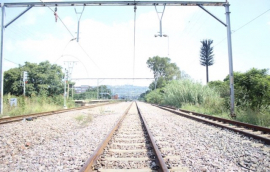
Government is pressing ahead with plans to introduce high-speed rail in South Africa, with proposed routes including Johannesburg to Musina and eThekwini to Johannesburg.
“We are preparing to send out a request for proposals, which will introduce a new era of long-distance rail travel in South Africa,” President Cyril Ramaphosa said on Thursday.
Delivering the State of the Nation Address (SONA) at the Cape Town City Hall, the President said nearly 30 companies indicated their willingness to participate in high-speed rail corridors when government put out a request for information last year.
Small business
Furthermore, government will provide more than R2.5 billion in funding to over 180 000 small and medium enterprises and extend a further R1 billion in guarantees.
“Naturally, we will seek to also focus on women- and youth-led businesses to foster their empowerment. And we will amend the National Credit Act regulations to make it easier to access credit at a lower cost.
“If every small and medium business in South Africa could employ one additional person, we would create three million new jobs.
“But many of these businesses, a number of which are owned by women and young people, cannot get funding to start or to grow. Many struggle to find markets for their goods and services,” the President said.
He noted that nearly all small and medium enterprises have to contend with a multitude of regulations, by-laws, licensing requirements and bureaucratic hurdles.
“We take seriously the public comments on the draft Business Licensing Bill and will ensure that the final Bill makes it easier, not harder, to start and run a small business in South Africa,” the President said.
The purpose of this Act is to:
- Provide for a common business licensing framework;
- Provide for principles of business licensing;
- Provide for the coordination of concurrent national and provincial competencies relating to business licensing;
- Promote greater consistency and uniformity in the application of procedures and decision-making by authorities responsible for business licensing;
- Provide a framework for co-operative governance and the harmonisation of standard procedures and minimum requirements for the processing of business licenses; and
- Provide for the appointment of authorised officers and the enforcement of business licensing. - SAnews.gov.za


