


Government has reiterated that it is opposed to illegal immigration and wants people entering South Africa to do so through lawful migration channels, while genuine asylum seekers must use the established refugee determination process.
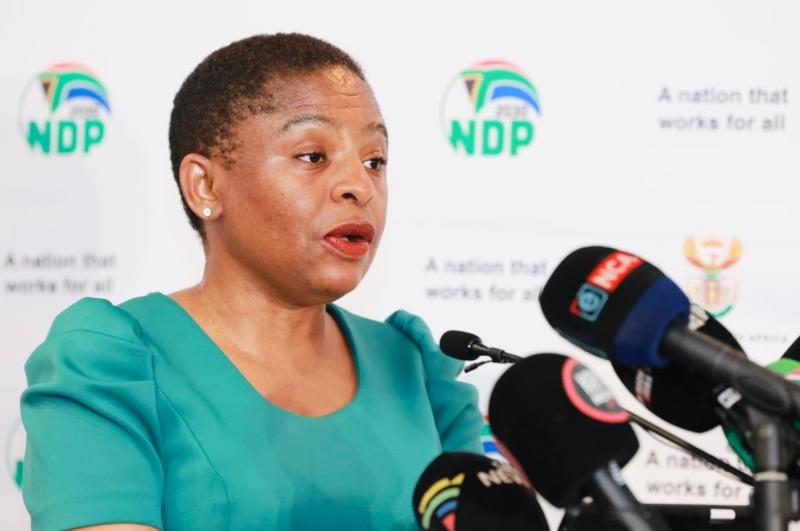
Answering questions during a media briefing in Pretoria on Thursday, Minister in the Presidency Khumbudzo Ntshavheni said government's position is clear, that people should enter and remain in South Africa lawfully.
“As government, we are anti-illegal immigration. Let's be very clear. We want people to come into the country legally. For those who come in irregularly because they want to seek refuge in South Africa … there is a process to facilitate that. We are not, as government, in a different position,” Ntshavheni said.
The Minister reiterated that government wants to prevent illegal immigration and is rebuilding systems to improve the management of migration.
Ntshavheni pointed to the establishment of the Border Management Authority (BMA) and plans to rebuild and strengthen border infrastructure, as part of government's efforts to tighten border management.
Government is also continuing with the documentation and deportation of people who have no lawful basis to remain in South Africa.
'First country of safety' principle
Ntshavheni also highlighted the principle that people seeking international protection should generally seek asylum in the first safe country they reach, particularly in the context of South Africa's neighbouring countries.
She said South Africa is surrounded by countries that are generally considered safe, and referred to Zimbabwe, Mozambique, Eswatini, Namibia, Lesotho and Botswana.
The principle, the Minister said, is relevant to government's position that South Africa's asylum system should provide protection to people who genuinely meet the legal requirements for refugee status, rather than becoming a pathway for people who do not qualify for international protection.
Ntshavheni stressed that South Africa does not recognise economic migration as a basis for refugee status.
“There is no economic refugee under our Constitution, our laws and under the United Nations conventions. A refugee is somebody who is running away from war and persecution,” the Minister explained.
Directives
Inter-Ministerial Committee (IMC) on Migration Chairperson, Justice and Constitutional Development Minister, Mmamoloko Kubayi, acknowledged that the directives issued by the Department of Home Affairs following the Constitutional Court judgment had not been shared with the committee before implementation.
READ | ConCourt asylum ruling does not automatically grant refugee status – IMC
She said the IMC is a coordinating structure that became involved when matters required cross-government intervention.
Kubayi said the committee had therefore agreed that decisions affecting the work of the IMC should in future be brought before it, so that their broader implications can be considered.
She said the issue also highlighted the need for stronger coordination across government in dealing with migration.
Government targets corruption in migration system
Kubayi reiterated government's work to tackle corruption and abuse within the migration system.
She said the IMC supports the request to extend the Special Investigating Unit (SIU) mandate, which will enable its investigations to cover the asylum system and Refugee Reception Offices.
The SIU's work has already resulted in cases being investigated, officials being dismissed and some facing criminal proceedings.
Home Affairs Director-General Tommy Makhode said the SIU's existing proclamation allows it to investigate maladministration, unlawful conduct and fraud within the department, including matters relating to permits and citizenship.
The investigations have since been extended to Refugee Reception Offices, with the SIU examining patterns that can indicate that people who did not qualify had obtained immigration or refugee-related status.
Makhode said data analysis has identified trends involving people who have received permits, despite allegedly not qualifying for them, and Home Affairs has started processes to revoke or withdraw those statuses.
He said the department is required to follow due process by notifying affected individuals and allowing them to make representations.
Investigations have also resulted in referrals to the National Prosecuting Authority and the Directorate for Priority Crime Investigation (Hawks).
The White Paper on Citizenship, Immigration and Refugee Protection, now adopted as government policy, is intended to address gaps and loopholes in the existing legislative framework, Makhode said.
On the Zimbabwe Exemption Permit, Makhode said public consultations on its future have been completed following court directives and government will follow due process before reaching a conclusion.
The IMC, the DG said, is engaging the broader regional dimension of migration, including the push and pull factors affecting migration within the Southern African Development Community.
On asylum appeals, Makhode said the existing system allows rejected asylum applicants to pursue appeals through the relevant refugee appeals authorities.
This is further supported by the White Paper and subsequent legislative drafting meant to address some of the challenges associated with the current system.
Legislative reform
Kubayi said government is also reviewing the legislative framework governing migration, citizenship and refugee protection, following concerns that the existing framework is fragmented.
The White Paper has been adopted as policy, with legislative drafting now underway to address gaps and inconsistencies between the country's migration-related laws.
Kubayi said legislative reform is necessary but acknowledged that public participation and the legislative process could take considerable time.
Government's broader migration response includes strengthening border management, tackling human smuggling and trafficking, addressing document fraud, improving migration and asylum systems, and ensuring that people, who have exhausted legal remedies and have no lawful basis to remain in the country, are removed. – SAnews.gov.za


