


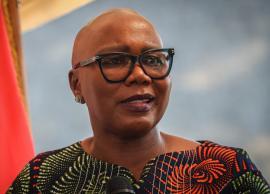
Government is positioning South Africa as a leading player in the global e-mobility and battery value chains, with a strong focus on local manufacturing, mineral beneficiation, skills development and job creation, says Science, Technology and Innovation (DSTI) Deputy Minister Dr Nomalungelo Gina.
Speaking at the 2026 uYilo e-Mobility Summit held at Nelson Mandela University (NMU) in Gqeberha on Wednesday, Gina emphasised the need for South Africa to seize the opportunities presented by the global transition to electric mobility.
"The question is not whether electric mobility will happen. The question is whether South Africa will capture value from it. We have the minerals, the research capability, the industrial base and the policy instruments needed to participate meaningfully in the green economy," said the Deputy Minister.
Gina highlighted the critical role of science, technology and innovation in supporting the growth of a locally competitive battery industry, noting that the DSTI's green transition strategy is anchored on the hydrogen economy and the battery economy.
Through the DSTI's energy storage research, development and innovation (RDI) flagship programmes, government is supporting the development of technologies, intellectual property (IP) and skills that can strengthen South Africa's participation in global battery and electric vehicle value chains.
A key milestone in this effort is a strategic collaboration between the University of Limpopo and the Manganese Metal Company, which successfully demonstrated pilot-scale production of battery-grade manganese sulphate from locally available manganese resources and locally developed, publicly funded IP.
The initiative converts locally mined manganese into high-value material for lithium-ion battery production, advancing South Africa's mineral beneficiation objectives.
In addition, the energy storage RDI programme provides specialised training across the lithium-ion battery value chain. The programme has achieved a graduate absorption rate exceeding 70%, with participants securing employment opportunities across various industries.
"We must convert innovation into industrial participation, investment, jobs and inclusive growth. Together, we can accelerate electric mobility, expand local manufacturing, create quality jobs and position South Africa as a leader in Africa's green industrial revolution," she said.
In her opening address, Professor Muki Moeng, Deputy Vice-Chancellor: Learning and Teaching at NMU, said that electric mobility formed part of South Africa's broader just energy transition.
"We need reliable electricity and charging infrastructure. We need batteries and the ability to test, reuse and recycle them. We need people who are trained to work safely with these new technologies. We need South African businesses that can develop, manufacture and supply products and services. And we need government, universities and industry to work together to make all of this happen," said Moeng.
The Professor added that research, innovation and sustainability are important to the realisation of this vision.
“This means using research to better understand real-world challenges, developing new technologies and solutions, preparing students and professionals with the skills needed for a changing world, and working with industry, government and other partners to put knowledge into practice,” said Moeng.
Held under the theme: "Accelerating Electric Mobility Implementation in South Africa: From Innovation to Industrial Participation", the summit featured an exhibition of the latest electric vehicles in South Africa.
On display were the eKamva minibus, South Africa's first 15-seater electric minibus taxi, as well as the Thula, the country's first game-viewing vehicle designed for silent, zero-emission wildlife safaris. Another proudly South African product is the Microcare electric vehicle charger.
Meanwhile, Chris Joseph Abraham, the founder and CEO of EV-Fleet, an engineering consultancy based in Stellenbosch, said data is needed to develop electric vehicle solutions that have financial, environmental and technical benefits to society.
"The summit's objective is to bring together all these organisations to share the data, knowledge and potential partnerships to make industry participation possible," he said. - SAnews.gov.za


