


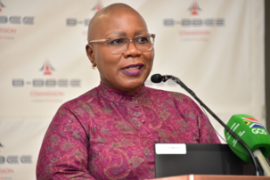
Deputy Minister of Science, Technology and Innovation, Dr Nomalungelo Gina, has urged South Africa to strengthen intellectual property (IP) awareness and protection for grassroots innovators, warning that many township and rural entrepreneurs continue to lose ownership of their ideas due to limited IP knowledge.
Speaking at the 17th World Intellectual Property Organisation (WIPO) South Africa Summer School on Intellectual Property and Technology Transfer in Durban, Gina referenced the well-known case of “Please Call Me” inventor Nkosana Makate as both “inspirational and cautionary”, saying it highlights the risks faced by innovators who fail to secure their ideas early.
She cautioned that many young innovators and researchers still lose out on significant economic opportunities because they are not empowered to protect their concepts.
The Deputy Minister said programmes such as the WIPO Summer School are helping to bridge this gap by expanding access to IP education and equipping emerging innovators to benefit from their own work.
Gina also linked her message to last week’s Grassroots Innovation Awards in Pretoria, noting that although community-based innovators continue to produce valuable ideas, many still lack the means to protect or commercialise them. She said government has a responsibility to ensure township and rural communities do not lose ownership due to inadequate access to IP education.
Highlighting the WIPO Summer School as a flagship capacity-building initiative, Gina said South Africa is proud to be one of the few global hosts of the programme, which is developing a growing pool of IP managers, technology transfer specialists and innovation leaders across the continent.
She said that investments in IP management - led by the National IP Management Office - are already resulting in increased disclosures, patents, licences and spin-off companies at universities and science councils.
The Deputy Minister also underscored the importance of protecting Indigenous Knowledge Systems, emphasising that traditional herbs, medicines and heritage assets must be formally recognised and owned by the communities that created them.
Mangosuthu University of Technology (MUT), which is hosting this year’s programme, said the event reinforces its commitment to strengthening research and innovation capabilities.
MUT’s Technology Transfer and Innovation Deputy Director, Dr Mandla Hlongwane, said hosting the internationally recognised programme positions the university as a contributor to national and continental knowledge economies.
The 2025 WIPO Summer School, which began on 24 November, will conclude on Friday, 5 December. – SAnews.gov.za


