


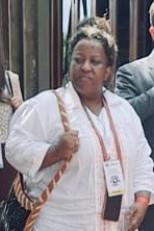
Brazil’s Minister of Human Rights, Macaé Evaristo, has heralded South Africa’s embrace and expansion of the Brazilian-initiated G20 Social Summit aimed at placing human dignity and civil society at the heart of the world’s most powerful economic forum.
The Minister delivered remarks at the closing ceremony of the G20 Social Summit held in Ekurhuleni on Thursday.
The summit was first held in the South American country during its G20 Presidency in 2024.
“In 2024, [Brazilian] President Lula [Luiz Inácio Lula da Silva] said we were living in a historic moment when we established a social pillar alongside the political and financial ones, and it is a great joy that we see the South African Presidency embrace this initiative.
“Brazil initiated the process. South Africa not only continued it but expanded it and we invite the future presidency to join us because this must be a path of no return. It is through the participation of those who feel in their day-to-day lives the impact of decisions we make that we will lead, overcome gridlocks and continue advancing,” Evaristo said.
The Minister reaffirmed South Africa’s stance that “civil society cannot be merely a spectator” – noting that societal challenges and issues must be at the forefront of discussions.
“It must participate broadly, diversly and meaningfully in the activity of the decision-making process of the G20. Social development, inclusion, equity and multiple ways of living and existing must be at the centre of global governance alongside macroeconomic, political and financial deliberations.
“The theme that South Africa has chosen for this presidency - ‘Solidarity, Equality and Sustainability’ - clearly expresses this commitment. History teaches us that it is not enough to have concepts to guide social policies and social environment justice. It is essential to recognise that the grassroots movements and the people [who] organise in their territories are the ones who turn concepts into reality,” she noted.
Evaristo wove in a historical thread – linking South Africa’s struggle and triumph against apartheid – to the current marginalisation of vulnerable communities across the globe.
“It is here that we have gathered for the G20 Social [Summit] to affirm that our steps come from far. This experience of past struggle resonates today in the struggles of peripheries… and they pave the way for the future of G20 countries without hunger, without poverty, without racism, without xenophobia, without LGBTA+ [lesbian, gay, bisexual, transgender and asexual] phobia, without ageism, without other forms of oppression.
“We recognise that embracing diverse voices and promoting dialogue is essential for G20 Social and [to] consolidate itself as a global reference platform for the integration of civil society.
“Listening to these voices and building response mechanisms with them is the only path that is right… to addressing inequities,” she said.
The Minister summoned the spirit of former President Nelson Mandela as a guiding light to bringing people together for the common good.
“The combination of the pillars - political, financial and social - reflects the history of our peoples’ struggles. Our great leader, Nelson Mandela, in the 90s emphasised the need for the people to be consulted in political negotiations in the country.
“Now, Brazil and South Africa together reinforce the importance of all people participating in the decisions about the global governance with solidarity, equality and sustainability,” she said. – SAnews.gov.za


