


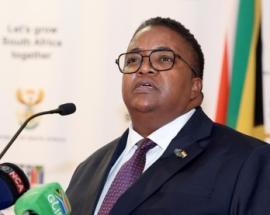
By Mmapaseka Steve Letsike
It is a sad reflection of our society that almost everyone knows or has heard of a woman who has experienced abuse, gender-based violence or femicide (GBVF). Sometimes we convince ourselves that such abuse occurs in the dark underbelly of society, or that it is far removed from our daily lives. Yet women are often harmed by people they know and trust – a husband, partner, superior, colleague, fellow church member, teacher or acquaintance.
To assume that violence and abuse against women are somebody else’s problem is to ignore the reality. It is our problem. Far too often, abuse happens behind closed doors but within the knowledge of family members, neighbours, colleagues, churches and communities. As a society, doing nothing is simply not good enough. Looking away can allow abuse to continue and can leave women and children trapped in cycles of violence.
Some would argue that tougher legislation and stronger enforcement are the primary solutions. South Africa has a comprehensive legislative framework to combat GBVF, and in 2022 existing protections were further strengthened through legislation aimed at strengthening the criminal justice system, promoting accountability and improving support for survivors.
These laws strengthen the protection of victims of gender-based violence, enhance measures to hold perpetrators accountable, and strengthen the ability of the criminal justice system to respond decisively to these crimes.
However, stronger legislation is only one part of our comprehensive approach to combating GBVF. The National Strategic Plan (NSP) on GBVF, launched in 2020, provides a national framework for addressing this scourge. It recognises that the response to GBVF must extend beyond the criminal justice system to include prevention, survivor support, economic empowerment and efforts to address the social conditions that make women and children vulnerable to violence.
Since the launch of the NSP on GBVF, progress has also been made in strengthening the criminal justice response. More than 32 regional courts have been designated as Sexual Offences Courts in various parts of the country, with further expansion taking place.
There are also Thuthuzela Care Centres across the country, which provide integrated support to survivors of sexual offences. These centres assist survivors with reporting cases to the police, accessing medical care and receiving counselling, helping to ensure that they do not have to navigate multiple systems on their own.
But, as we have seen time and again, laws and interventions alone will not end GBVF. It will only be defeated when all of society takes responsibility for preventing violence, supporting survivors, and holding perpetrators accountable.
We cannot wait until a tragedy has unfolded before raising our voices. Too often, cases of violence reveal that people knew about or suspected the abuse but remained silent. We must create communities where speaking out, seeking help, and protecting those at risk are seen as collective responsibilities.
The consequences of GBVF extend far beyond the immediate physical and psychological harm experienced by survivors. Violence affects children, families and communities and carries broader social and economic costs. Many households are women-led, with women serving as primary income earners and caregivers. When women experience violence, the consequences can reverberate throughout the household, affecting children's wellbeing, family stability and household livelihoods.
This is why the government has also pursued legislation, policies and programmes aimed at advancing women's economic empowerment and participation. Gender equality cannot be fully realised without the meaningful participation of women in the economy and in all spheres of society.
The Employment Equity Act and other measures aimed at advancing gender equality have contributed to creating greater opportunities for women to participate meaningfully in the economy. Government has also supported women-owned enterprises through initiatives involving institutions such as the National Empowerment Fund and the Small Enterprise Development Finance Agency, among others.
Economic empowerment is an important part of creating greater choices for women. A woman who has access to income, employment, skills and economic opportunities may be better positioned to make decisions about her life and, where necessary, to leave an abusive environment. However, economic empowerment must be part of a broader response to GBVF; no woman should have to achieve financial independence before she deserves to live free from violence.
Ultimately, the fight against GBVF requires all of us. Families must raise boys and girls to respect one another, value human dignity and understand that violence is never an acceptable expression of power or conflict. Communities must challenge harmful attitudes and behaviours that normalise violence against women and children. Friends, neighbours, colleagues and institutions must be prepared to speak up and support survivors.
We cannot stand idly by while our sisters, mothers, wives, partners and daughters are abused, violated, raped or murdered. Ending GBVF requires sustained action, courage and collective responsibility. Government will continue strengthening legislation, services and interventions, but lasting change will only come when every South African recognises that preventing violence is our shared responsibility.
If you see something, say something. If you suspect that someone is experiencing abuse, do not simply look away. Help connect survivors to the appropriate support services and encourage them to seek assistance.
Together, we can build families and communities where women and children are safe, respected and able to live with dignity, free from violence and fear.
*Letsike is the Deputy Minister in the Presidency for Women, Youth and Persons with Disabilities


