


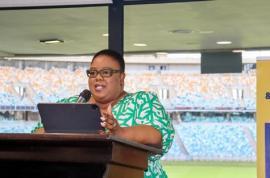
The eThekwini Municipality has reaffirmed its commitment to building a disaster-resilient and inclusive city as stakeholders gather in Durban for the three-day Inclusivity for All on Disaster Risk Reduction and Climate Change Summit.
The summit, currently underway at Moses Mabhida Stadium, has brought together key stakeholders from municipal structures, provincial and national government, academia, and local communities.
The gathering, which started on Monday, serves as a powerful platform to confront a critical reality: Disasters disproportionately affect vulnerable groups, who continue to carry the heaviest burden.
eThekwini Deputy Mayor Zandile Myeni said the engagement marks a decisive shift from planning in isolation to building more inclusive systems that recognise the unique vulnerabilities within communities.
“The reality is that disasters expose the deepest inequalities in our society. As eThekwini, we are determined to change this narrative by placing people at the centre of our resilience efforts,” Myeni said.
Myeni added that through these engagements, the municipality is strengthening its capacity to protect lives, safeguard infrastructure, and ensure that every resident, especially the most vulnerable, are reached, heard, and supported.
“This is how we build a truly resilient and caring city,” she said.
Participants, including experts and practitioners, stressed that resilience efforts must be inclusive to be effective. Discussions extended beyond policy and focused on the lived experiences of at-risk groups such as women, persons with disabilities, the elderly, and residents of informal settlements, who often face barriers to early warning systems, access to essential services, and emergency support.
Technical Advisor with the GIZ Resilience Initiative Africa, Sophia Kamau, underscored the urgency of inclusive action, noting that true resilience strategies is measured by how effectively cities protect their most vulnerable residents.
“eThekwini is demonstrating real leadership by turning inclusion into action, ensuring that disaster risk reduction is not only effective, but equitable and people-driven,” she said.
Stakeholders also explored practical interventions to ensure that early warning systems reach everyone, enhance service delivery, and ensure disaster planning reflects the real needs of communities.
From gender mainstreaming to disability inclusion, the summit challenged the status quo and called for systems that are not only effective, but fair and just. – SAnews.gov.za


