


The Electoral Commission of South Africa (IEC) has welcomed stakeholders’ strong commitment in KwaZulu-Natal to strengthen electoral democracy, enhance voter participation and ensure peaceful Local Government Elections.
The collective commitment follows the successful conclusion of a week-long stakeholder engagement programme held in the province from 20 - 24 April.
The engagement formed a critical part of the Commission’s preparations for the upcoming elections.
The engagement also responded directly to the findings of the 2026 Human Sciences Research Council’s Voter Participation Survey (VPS), which provides the Commission with an important barometer of public sentiment ahead of elections.
“This yardstick of public sentiment captures the national picture, whilst disaggregating provincial data,” Commission chairperson, Mosotho Moepya, said during a media briefing on Friday.
Highlights of the study
In KwaZulu-Natal, the findings painted a sobering picture, with a sharp decline in public confidence in democracy.
“The study highlights declining trust in key political institutions, growing political disengagement, and rising voter disillusionment. KZN is among the provinces recording the sharpest decline in confidence in democracy.
“These trends underscore why the Commission’s presence in the province this week has been both necessary and urgent,” Moepya said.
The survey highlights a sharp decline in public confidence in democracy in KwaZulu-Natal, with satisfaction levels dropping from 54% in 2004 to just 6% in 2025, compared to a national decline from 65% in the 2000s to 36%.
“While most adults continue to support democratic values, many feel that democracy is not working well in practice,” the study revealed.
It also revealed high dissatisfaction in the province’s economy, with 88% people unhappy about current conditions.
According to the study, the same proportion expect the economy to worsen in the next five years.
“Sixty percent say life in their communities has worsened over the last five years.”
Trust in institutions, including the Electoral Commission, is also lowest in the province at 20%, compared to a national average of 32%.
Despite this, the Commission noted encouraging signs, with 76% of adults in the province indicating an intention to vote if elections were held imminently, and 69% affirming voting as a civic duty.
Recognising that the forthcoming Local Government Elections will be highly contested, the Commission said efforts to improve voter turnout must address widespread public disillusionment, declining trust in institutions, and concerns about electoral integrity.
“Strengthening confidence in the Electoral Commission through consistent, transparent performance, while enhancing clear and proactive communication, particularly through the media, can help counter negative perceptions, address fears of irregularities, and reinforce the importance of active and peaceful citizen participation,” the chairperson said.
Key activities and outcomes of the week
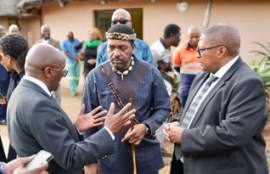
A key highlight of the visit was an engagement with King Misuzulu kaZwelithini, who pledged support for the Commission’s work and committed to encouraging voter registration and participation in the upcoming elections in a peaceful, respectful and responsible manner.
The Commission also met with provincial leadership, including the Premier, political parties such as the Inkatha Freedom Party (IFP), the National Freedom Party (NFP), the African National Congress (ANC), and the Economic Freedom Fighters (EFF)., as well as civil society, faith-based organisations and the security cluster.
The Commission said meetings with the Democratic Alliance (DA) and Umkhonto We Sizwe Party (MKP) are being rearranged to more suitable dates.
“These engagements reaffirmed the importance of collaboration in strengthening electoral integrity, enhancing voter education, and building public confidence.,” Moepya said.
Stakeholders raised concerns about electoral fairness, misinformation and barriers to participation, particularly in rural and marginalised communities. Delays in the demarcation process in municipalities including eThekwini, Inkosi Langalibalele, Alfred Duma and uMkhambathini, were also flagged as challenges.
The Commission said engagements with the security cluster confirmed readiness to ensure a safe electoral environment, including the capacity to investigate and prosecute election-related offences.
Across all engagements, key priorities included rebuilding trust in democratic institutions; shared commitment to peaceful, credible, and inclusive elections; intensifying voter education, especially among young people, and combating misinformation and strengthen communication efforts.
“The Commission’s visit to the province was to listen, to engage and to work collaboratively with stakeholders to rebuild trust, strengthen participation, and ensure a conducive environment for free and fair elections,” Moepya said. – SAnews.gov.za


