


Domestic resource mobilisation by increasing government revenue through taxation and other non-debt income, remain the foundation for countries to achieve fiscal sustainability and reaching the Sustainable Development Goals (SDGs).
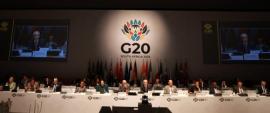
This according to a Chair’s Summary of the first Finance and Central Bank Governors’ Meeting of the South African Group of 20 (G20) Presidency held in Cape Town, this week.
“[Members] raised the issue that developing countries are struggling to mobilise domestic resources and benefit from international tax reforms.
“[The members] called on the partners of the Platform for Collaboration on Tax [PCT] and regional organisations to coordinate and report on progress in strengthening capacity-building frameworks to enhance the effectiveness and efficiency of technical assistance, as stated in the Rio de Janeiro G20 Ministerial Declaration on International Tax Cooperation.
“The IMF [International Monetary Fund] is requested, in consultation with the other PCT partners, to compile a report on how to strengthen revenue administrations, as a follow up to its note ‘Alternate Options for Revenue Mobilisation’ to the Brazilian Presidency,” the Chair’s summary noted.
The two-day meeting also called for information sharing by the Organisation for Economic Co-operation and Development to “report on progress to exchange foreseeably relevant information regarding real estate for combating tax evasion and avoidance purposes on a voluntary basis”.
“[Members] looked forward to the OECD [Organization for Economic Cooperation and Development] reporting on its work plan to put forward simplifications, to promote tax certainty and reduce compliance costs while maintaining the integrity of existing tax rules.
“[Members were] mindful of the need for an inclusive, effective and stable international tax system, encouraged continued and constructive engagement with parties in the ongoing discussion on the development of a UN [United Nations] Framework Convention on International Taxation Cooperation with the aim of reaching broad consensus, maximising synergies among the existing international fora, while seeking to avoid unnecessary duplication of efforts,” the summary read on Thursday.
Continuing discussions on the international tax agenda was also welcomed.
“[Members] remained confident that the G20 is the relevant body to ensure that positive momentum on this work is maintained.
“The South African G20 Presidency invites the OECD/G20 Inclusive Framework [IF] on Base Erosion and Profit Shifting [BEPS]…to report to us by the October meeting on the progress on BEPS; and the OECD in conjunction with the Global Forum on Transparency to take stock of progress on transparency initiatives since the inception of the G20,” the summary said.
The meeting also noted progress made on the Two Pillar solution.
The Two Pillar solution proposes addressing taxation issues emanating from the digital economy by firstly reallocating some taxing rights to market jurisdictions and second, introducing a global minimum tax.
South Africa has already implemented the global minimum tax through the Global Minimum Tax Act 46 of 2024.
“[The members] acknowledged the concerns and the need to respect the sovereignty of each country and supported the swift implementation of the Two-Pillar Solution by all interested jurisdictions, including expeditious completion of negotiations on the final package of Pillar One.
“Recognising that many countries have made progress in implementing Pillar Two, the South African G20 Presidency calls on the OECD/G20 IF on BEPS, in cooperation with international organisations, to provide country-based specific technical support to developing countries,” the summary said. – SAnews.gov.za


