


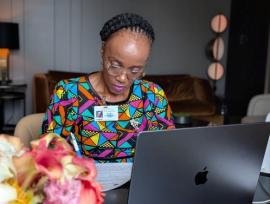
Minister in the Presidency for Women, Youth and Persons with Disabilities, Sindisiwe Chikunga, has urged governments, organisations and communities to ensure that persons with Down syndrome are meaningfully included in decisions that affect their lives.
The Minister made the call at a side event hosted by Down Syndrome South Africa and the African Down Syndrome Network on Thursday, on the sidelines of the 19th Session of the Conference of States Parties to the United Nations Convention on the Rights of Persons with Disabilities (COSP19).
Held under the theme: "Nothing About Us Without Us: Self-Advocates Moving From Participation to Representation”, the event focused on strengthening the role of persons with Down Syndrome in leadership, decision-making and public life.
Addressing delegates, self-advocates, disability rights organisations and stakeholders, Chikunga called for a global shift from visibility to voice, from presence to power, and from participation to representation.
She emphasised that disability inclusion must go beyond consultation and token participation to ensure that persons with disabilities are represented where decisions are made.
"The future of disability inclusion lies not only in recognising the rights of persons with disabilities, but in ensuring that they are empowered to shape the policies, programmes and institutions that affect their lives," the Minister said.
The Minister reaffirmed South Africa's commitment to advancing the rights of persons with disabilities through inclusive policies and active participation in global efforts aimed at breaking barriers to development and equality.
She highlighted South Africa's support for the United Nations Disability Inclusion Strategy (UNDIS), describing it as a critical framework for promoting disability inclusion across all areas of the UN's work and strengthening the implementation of the Convention on the Rights of Persons with Disabilities (CRPD).
South Africa joined governments including Lesotho, Austria, Costa Rica, Finland, Poland and China, as well as the International Disability Alliance, in supporting the side event and advancing disability inclusion on the international agenda.
United Nations Disability Inclusion Strategy
Chikunga welcomed the launch of the revised United Nations Disability Inclusion Strategy (UNDIS 2.0), describing it as an important framework for addressing current and emerging challenges while accelerating progress towards disability-inclusive development by 2030.
"The United Nations must continue to lead by example. An inclusive United Nations is better positioned to support Member States in implementing the Convention on the Rights of Persons with Disabilities and the 2030 Agenda for Sustainable Development," Chikunga said.
While acknowledging progress made globally since the adoption of UNDIS in 2019, the Minister noted that millions of persons with disabilities continue to face barriers in accessing education, healthcare, employment, social protection and decision-making processes.
She warned that these challenges are often exacerbated by poverty, inequality, conflict and humanitarian crises, making it imperative for governments and international institutions to strengthen efforts towards inclusion and accessibility.
As the international community marks the 20th anniversary of the CRPD, the Minister said the launch of UNDIS 2.0 presents an opportunity to renew commitments to building a more responsive and inclusive multilateral system.
She also called for stronger accountability mechanisms within the UN system and greater involvement of persons with disabilities in the design, implementation and evaluation of policies and programmes.
"The United Nations should continue strengthening a culture of accessibility and ensure that persons with disabilities are actively involved in shaping the decisions that affect their lives," Chikunga said.
Chikunga affirmed South Africa's support for ongoing UN reform efforts and proposed elevating the United Nations Disability Inclusion Strategy to an Under-Secretary-General-led office to strengthen its visibility, autonomy and institutional capacity.
The side event served as a platform to amplify the voices of self-advocates with Down syndrome and reinforce the principle that meaningful inclusion requires more than participation—it requires representation, leadership and influence.
As delegates reflected on the theme "Nothing About Us Without Us", the message from the gathering was clear: persons with Down syndrome and other disabilities must not only be present in conversations about their future, but must be empowered to lead, influence decisions and help shape the future. – SAnews.gov.za


