


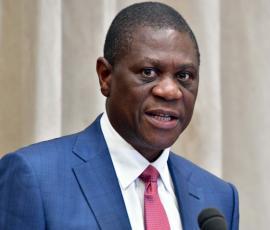
Tackling the significant challenges in South Africa’s water and sanitation sector requires increased investment in infrastructure and sustainable water management to ensure a secure supply for everyone, Deputy President Paul Mashatile said.
“I commend this timely dialogue because it serves as an essential circuit breaker for the polycrisis through integration, accountability, and a common operational strategy.
“It is well-positioned to generate tangible, scalable solutions,” Deputy President Mashatile said in his address to the Association of Water and Sanitation Institutions of South Africa (AWSISA) on Monday.
The AWSISA functions as a unifying strategic body and key sector steward for the country’s water sector by encompassing the entire value chain from resource management to end-user service delivery.
South Africa is facing a critical water insecurity crisis fuelled by a mix of climate change, ageing infrastructure, socio-economic inequality, and poor municipal management.
According to the Deputy President, the country experiences annual rainfall averaging just 497 mm, resulting in significant water scarcity exacerbated by climate-driven extreme weather events like Cape Town’s “Day Zero” drought and recent floods in KwaZulu-Natal.
These issues disrupt the hydrological cycle and compromise both water availability and quality.
In addition, ageing infrastructure has led to Non-Revenue Water (NRW) rates as high as 40 to 50% in some areas, due to leaks, operational inefficiencies, and illegal connections.
He told the gathering at Emperors Palace in Johannesburg, that this not only costs billions annually, but also hampers necessary investments in water expansion projects.
To combat these challenges, government has established the Water Resources Infrastructure Agency Act, aimed at centralising water infrastructure management and funding.
In addition, the National Water Safety Management Programme calls for an additional 15 000 skilled water professionals by 2030 to enhance municipal governance and service delivery.
As the demand for water surges due to population growth and urbanisation, Deputy President Mashatile said addressing these issues is vital for ensuring health, sanitation, and progress towards the Sustainable Development Goals related to clean water access.
Public-private partnerships
The country’s second-in-command said he was confident that today’s dialogue would facilitate direct, outcome-focused engagements among the Department of Water and Sanitation, Water Boards, regulatory bodies, and local municipalities.
“As leaders in the sector, it is crucial to utilise this dialogue to establish transparent and strategic public-private partnerships. Such partnerships have the potential to secure the substantial long-term capital needed to achieve the ambitious infrastructure renewal and development objectives outlined in the National Water Resource Strategy III.”
Best practice
He believes that the dialogue should rapidly accelerate the adoption of tested African and Global South best practices.
“Reducing water loss is very important. To achieve environmental safety and ensure water security for future generations, it is essential to take deliberate actions to reduce water consumption, promote the reuse and recycling of water, and implement rainwater harvesting.
“This approach is vital not only for the financial viability of water utilities but also for safeguarding public health.”
Africa Water Vision 2063
He also took the time to call on the African continent to commit to implementing the Africa Water Vision 2063, which establishes a framework for a unified, long-term approach to water security, transitioning from fragmented responses to collective action.
“As leaders and changemakers, it is imperative to dedicate ourselves to developing sustainable solutions that guarantee universal access to clean water and sanitation.
“Our efforts should focus on the most marginalised and vulnerable populations, particularly women, children, and individuals residing in remote or underserved regions.”
He told delegates that access to such vital resources not only improves health and wellbeing, but also promotes social equity and justice, essential components for community development and sustainability.
“Together, we have the power to make a difference. Together, we can build a future where water is not a privilege, but a fundamental human right for all.” – SAnews.gov.za


