


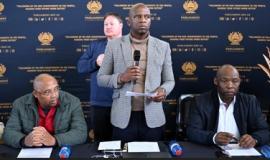
Residents of the Greater Lejweleputswa District Municipality in the Free State have called for stricter measures to ascertain the authenticity of marriages between foreign nationals and South Africans.
The call was made during the second of three public hearings on the Marriage Bill [B43—2023], held by the Portfolio Committee on Home Affairs at the Toronto Recreation Centre in Welkom, on Saturday.
“The apprehension raised by participants was that there is a worrying increase in marriages of convenience that expose the national register to fraudulent entry, as a result, participants argued that the Bill must prescribe a clear process to ensure that the intended matrimony is driven by true intentions and not by nefarious reasons,” the Portfolio Committee on Home Affairs said.
The issue of fraudulent marriages also surfaced during the two previous public hearings held in other provinces, prompting the committee to call on the Department of Home Affairs to urgently intervene and thoroughly investigate these claims.
Marriage Bill
The Marriage Bill seeks to rationalise the marriage laws of various types of marriages and introduces a single marriage statute to replace the three existing marriage laws governing civil marriages, customary marriages and civil unions.
The key objectives of the bill include recognition of all forms of marriage, regardless of religion, custom, belief, or sexual orientation; legal protection for all existing marriages, including those concluded before the bill’s enactment; and prohibition of child marriages, aligning South Africa with international human rights obligations.
In this regard, the bill introduces a requirement that both prospective spouses must be 18 years and older. Itl further introduces offences and penalties for entering or concluding marriages with minors, as well as solemnising such marriages.
The Bill also ensures that the Minister of Home Affairs can designate marriage officers from all sectors of society, including traditional leadership, and sets out the requirements for designation as a marriage officer.
Some participants raised a concern that the Marriage Bill was not in line with the Constitution.
“This concern arose from an observation that by harmonising different types of marriage laws into a single marriage statute might infringe on the right of choice as it is enshrined in the Constitution.
“Participants expressed contrasting views on the issue of polygamy. Some supported it highlighting, among other things, its long and deep history in the African communities. They said legislating it will ensure legal framework and certainty,” the committee said.
Other participants called for the equality and protection of all wives in polygamous marriages, especially when a husband enters into a traditional marriage in the rural areas and civil marriages in urban areas where they work.
The committee has expressed concerned with some sections of society for showing a lack of decorum and exhibiting actions that bordered on “discrimination” as it relates to same sex marriages.
The committee emphasised and asserted the right of every individual as it is enshrined in the Constitution, and that any view should be respected, protected, and above all, the constitutional rights of every South African should be respected.
“Participants differed on the intention to increase the legal age of consent, with some participants arguing that 18 years marriage threshold was appropriate for consent to enter into a marriage. Some argued against the 18 years, citing the lack of maturity and arguing that children must complete their educational pathways before marriage.
“Marriage officers also highlighted their fear of retribution if they refused to solemnise marriages that go against their beliefs. These participants called for clear and unambiguous measures in place to protect marriage officers if they refuse to solemnise marriages that are against their belief systems,” the committee said.
Other participants called for the Department of Home Affairs to present a roll-out plan for the training of the new marriage officers on the implementation of the bill.
“They argued that polygamous marriages are not sustainable and at times, they are easily riddled with conflicts especially relating to property rights. They called for the prohibition of this type of marriage.
“On the same sex marriages, there were also differences on the recognition of these marriages. Representatives of a number of faith-based organisations highlighted contradictions with their religious beliefs and teachings. Those in support of same sex marriages highlighted that every South African has a constitutional right of choice and thebBill’s intentions to recognise their marriages is constitutional,” the committee said. -SAnews.gov.za


