


As South Africa marks 70 years since the historic 1956 Women’s March, Cabinet has approved the implementation of a Socio-Economic Empowerment of Women Index aimed at strengthening gender equality and inclusive economic participation.
The index will serve as an annual scorecard to measure and track progress in women’s socio-economic empowerment and participation in decision-making structures across the country.
The initiative addresses the absence of a comprehensive and standardised measure of women’s socio-economic empowerment and participation in decision-making structures in South Africa.
The index is structured across three key pillars, including social, economic and decision-making.
On the social sphere, the index will focus on health and education, while the economic component will assess labour market participation and access to resources. The decision-making sphere will evaluate women’s representation in both public and private sector decision-making.
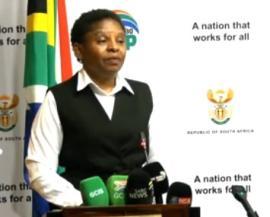
Speaking during a post-Cabinet media briefing on Thursday, Minister in the Presidency Khumbudzo Ntshavheni said baseline findings show mixed progress.
“The baseline of the Socio-Economic Empowerment of Women Index indicates public sector decision-making as a dimension that scores highest in terms of women empowerment whilst labour market and resources dimension records the lowest scores.
“The lowest indicator areas include firms with female ownership, share of female Chief Executive Officers of firms listed on the JSE, access to credit, and employment in high skill occupations,” the Minister said.
CEDAW report approved
Cabinet has also approved South Africa’s Sixth Periodic Report on the implementation of the Convention on the Elimination of All Forms of Discrimination Against Women (CEDAW).
The report outlines progress made by South Africa in strengthening the constitutional, legislative policy and institutional framework for gender equality, women’s empowerment and substantive equality.
Key developments highlighted in the report include the implementation of the Gender Responsive Planning, Budgeting, Monitoring, Evaluation and Auditing Framework; the 2019 National Strategic Plan on GBVF of 2019; economic empowerment initiatives; and public sector gender mainstreaming and representation of women in leadership and decision-making.
Despite the significant progress, Cabinet acknowledged ongoing structural and implementation challenges, including high unemployment among women, the persistent scourge of Gender-Based Violence and Femicide (GBVF), weak translation of educational gains into labour outcomes, and slow progress in gender mainstreaming in the private sector. – SAnews.gov.za


